Design
Privacy Landscaping in North Texas: Trees, Hedges, and Screens for Dallas Yards
-
Blount Designs

On the close-set luxury lots across Dallas–Fort Worth, privacy is one of the first things a homeowner asks for and one of the hardest to get right. Privacy landscaping is how you solve it with plants and landform rather than relying on a taller fence alone — evergreen trees, layered hedges, and designed screens that block sightlines from neighbors and the street while still reading as part of the garden. Done well in North Texas, privacy planting turns an overlooked backyard or pool into an enclosed retreat that feels intentional in every season. Done carelessly, it becomes a struggling row of the wrong plant fighting the clay. This is how to think about privacy landscaping for a North Texas property.
If you want to see how this plays out on real projects, our landscape and gardens work is built around exactly this kind of layered, year-round planting.
What Is Privacy Landscaping?
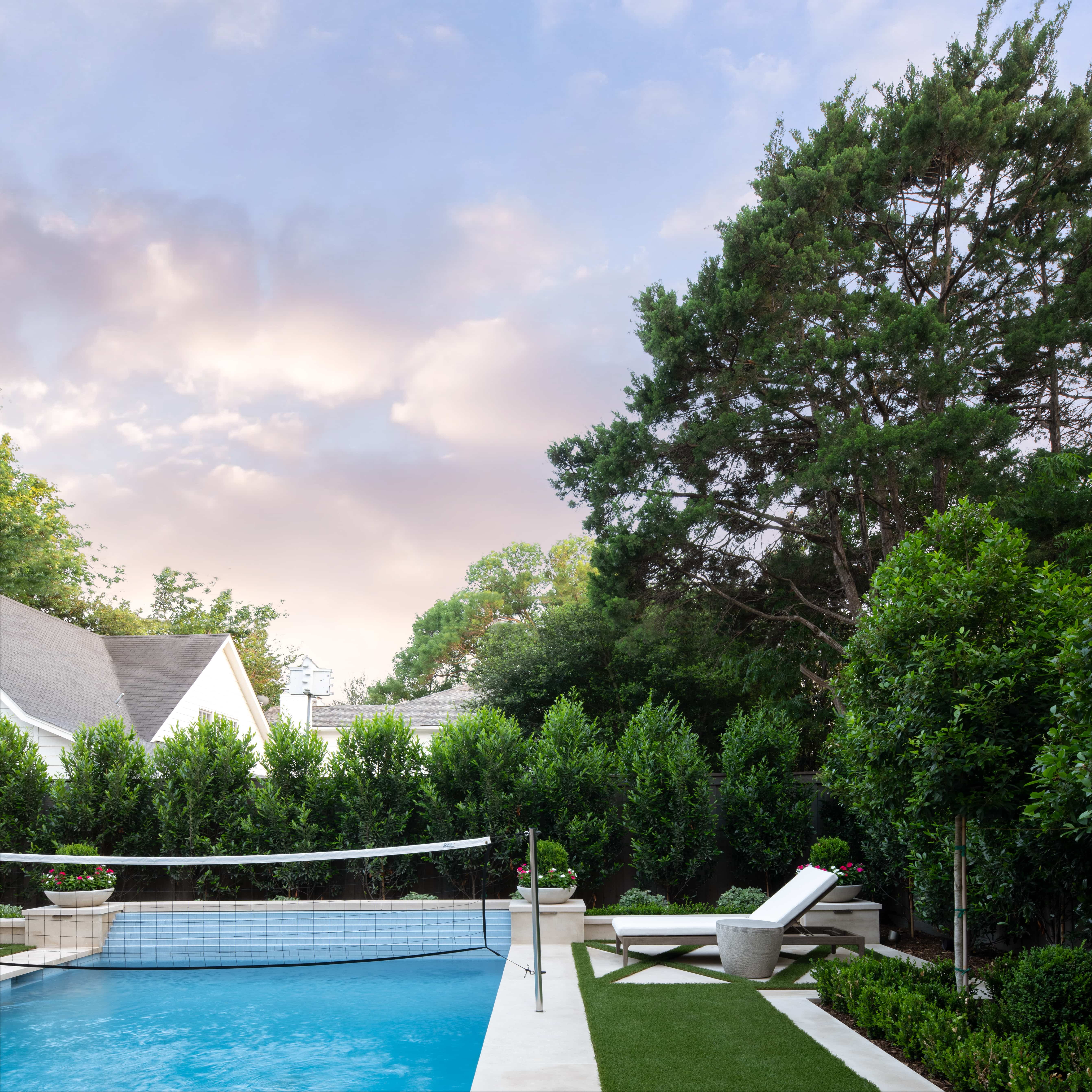
Privacy landscaping is the deliberate use of planting and landform — evergreen trees, hedges, shrub screens, and occasionally planted berms — to control what can be seen into and out of a space. Sometimes it stands in for a fence; more often it works alongside one, softening the hard line of a fence and adding the height a six-foot fence cannot reach. The goal is not simply to build a green wall. It is to shape the edges of a property so the yard feels enclosed and calm, screen specific problem views such as a two-story window next door, and create outdoor rooms that feel separate from the world around them.
Why Privacy Landscaping Matters on North Texas Lots
Two things make privacy a design priority in this market. First, lot spacing: in established enclaves like the Park Cities and Preston Hollow, and in newer high-density luxury pockets, homes sit close together and often look directly onto one another's yards and pools. Second, the vertical problem: a standard fence stops at six feet, but the views that matter — second-story windows, elevated decks, a neighbor's rear addition — sit well above it. Planting is the only practical way to screen at that height without building a wall that feels like a fortress. Handled inside a full site plan, privacy is resolved early, alongside grading and sightline studies, rather than patched in after construction. Our land design process treats screening as a design decision from the start, not a retrofit.
What Are the Best Privacy Plants for North Texas?
The plants that succeed here share three traits: they are evergreen, they tolerate the region's alkaline clay soil and summer heat, and they hold their density from the ground up. A few workhorses come up again and again.
1. Evergreen Privacy Trees
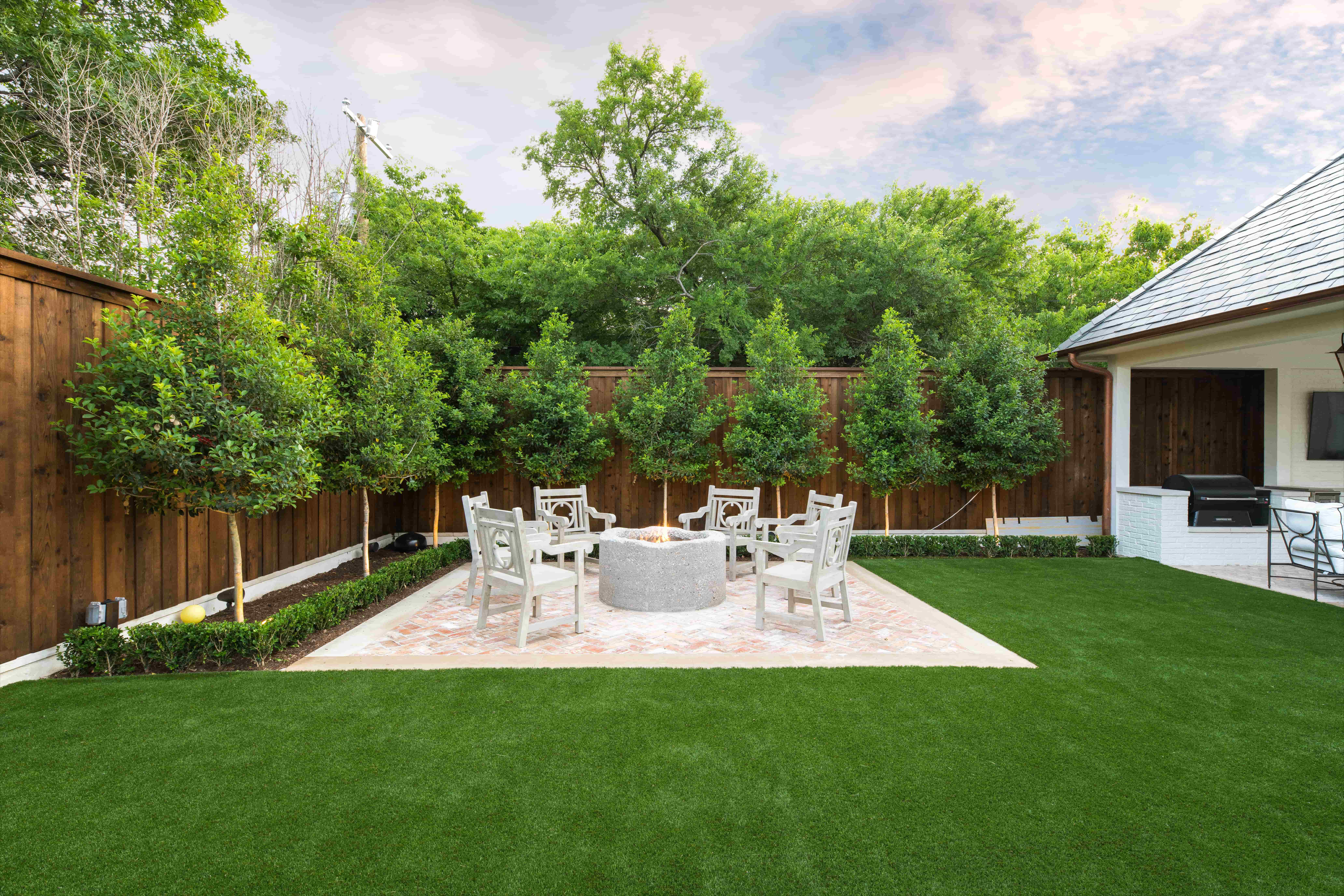
For height and year-round screening, Nellie R. Stevens holly and Eagleston holly are among the most reliable choices — dense, deep green, tolerant of clay, and able to be sheared into a formal screen or left fuller. Wax myrtle, a Texas native, grows quickly and can be shaped into a small multi-trunk tree that screens while staying light and airy. Where a taller, more informal evergreen is needed, the native Eastern red cedar is exceptionally tough. Larger specimen evergreens are also used as anchors to block a specific upstairs sightline rather than screening the whole line.
2. Layered Evergreen Hedges and Screens
Most of the privacy work happens at the mid-height layer, where a continuous evergreen screen runs along the fence line. Hollies, wax myrtle, and waxleaf ligustrum all form dense, glossy screens that read as a finished hedge within a few seasons. The strongest results come from layering rather than a single row — a taller back layer against the fence, a fuller mid-layer in front — so the screen has depth and never shows a bare base. This is the approach in most of our poolside projects, where a solid evergreen wall of planting wraps the space and the fence largely disappears behind it.
3. Boxwood and Structural Evergreens
At the base, clipped boxwood and other structural evergreens do quieter work: they define beds, hold a crisp line along paving, and give the taller screen a finished foundation. In a luxury landscape, this lowest layer is what keeps a privacy planting from looking like an unmanaged thicket — it frames the screen and ties it back to the architecture.
4. Clay Soil, Drainage, and Spacing
Plant selection is only half the job; the soil is the other half. North Texas clay holds water and moves with the seasons, so beds have to be graded and, where needed, amended or gently bermed so roots never sit in standing water — the same discipline covered in our guide to mastering Dallas clay soil. Spacing matters just as much: set to the mature width of each plant so the screen knits together without crowding. Where grade changes or heavier screening berms are involved, the work overlaps with grading and retaining walls so the planting sits on ground that drains.
How Do You Design Privacy Without It Feeling Like a Wall?

The difference between a privacy planting that feels luxurious and one that feels like a barricade is layering and restraint. A designed screen works in tiers — a canopy or tall evergreen layer for the high sightlines, a dense mid-layer for the fence line, and a structural base layer — with enough variation in texture and form that the eye reads a garden, not a fence. Built elements can carry part of the load too: a decorative laser-cut metal panel or a slatted screen handles a specific gap with architecture rather than more greenery, which keeps a tight corner from feeling overplanted. Landscape lighting finishes the effect — uplighting the trunks and canopies of the screening trees turns the privacy planting into the backdrop of the space after dark rather than a dark mass at the edge of the yard.
Privacy Landscaping Around Pools and Outdoor Living
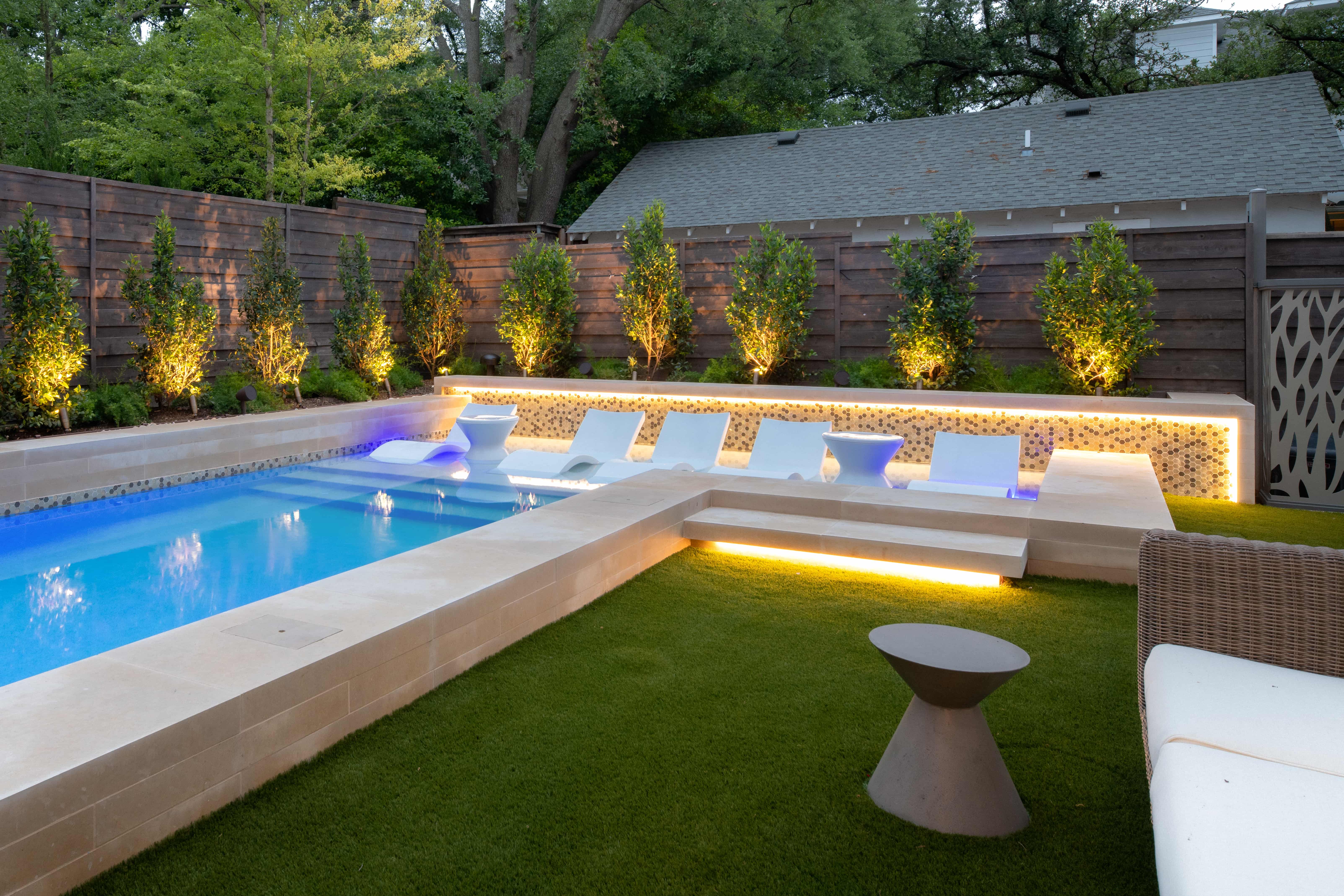
Pools are where privacy planting earns its keep. A pool that is overlooked rarely gets used the way it should, so screening the pool enclosure is often the whole point of the project. The most successful poolside screens combine a continuous evergreen hedge along the fence with structural boxwood and planted containers at the coping, so the greenery reads as an intentional garden wrapping the water rather than a hedge behind a fence. Where the design calls for it, a tiled water wall or scupper feature adds sound that further separates the space from the neighborhood — drawn from the same water and fire features program as the rest of the landscape. Because the planting, the pool and spa, and the surrounding living areas are designed together, the screen frames the pool instead of competing with it. Our modern luxury poolside retreat shows how a fully screened pool environment comes together as one composition.
Frequently Asked Questions About Privacy Landscaping in North Texas
What are the best fast-growing privacy trees for North Texas?
In North Texas the most reliable evergreen privacy trees balance speed with durability in clay soil. Nellie R. Stevens holly and Eagleston holly form dense, shearable screens; wax myrtle is a fast native evergreen that tolerates clay, heat, and drought; and Eastern red cedar is a tough native for taller, informal screening. The right choice depends on the height you need, how formal the look should be, and how much room the roots have.
How far apart should privacy hedges be planted?
Spacing depends on the plant and how quickly you want the screen to close in. As a general guide, larger screening hollies are often set around five to six feet on center so they knit into a continuous hedge as they mature, while smaller shrubs go closer. Planting too tightly stresses the plants and invites disease, and too far apart leaves gaps for years. A designer sets spacing to the mature width of the specific plant rather than a single rule.
Do privacy hedges grow well in Dallas clay soil?
Yes, if you choose clay-tolerant species and prepare the site. Plants like Nellie R. Stevens holly, wax myrtle, and waxleaf ligustrum handle North Texas clay and heat well. The bigger issue is drainage — clay holds water, so beds are graded and, where needed, amended or bermed so roots do not sit in standing water. Getting the soil and drainage right at planting is what separates a screen that thrives from one that struggles.
What is the difference between a privacy hedge and a privacy screen?
A privacy hedge is typically a row of one plant sheared into a continuous, formal green wall. A privacy screen is a looser, often mixed planting — layered trees, shrubs, and understory — that blocks views while reading as a garden rather than a wall. Screens can also combine planting with built elements like a decorative metal panel or a slatted fence. Which one fits depends on the architecture of the home and how formal you want the space to feel.
Privacy is one of the highest-impact moves in a North Texas landscape, and it rewards getting the plants, soil, and layering right the first time. Schedule a design consultation and we will walk your property, identify the sightlines worth screening, and plan a privacy landscape built for the way you live outdoors. Start the conversation here.
Related