Design
How to Design and Build an Outdoor Court That Complements Your Dallas Pool and Outdoor Living
-
Blount Designs
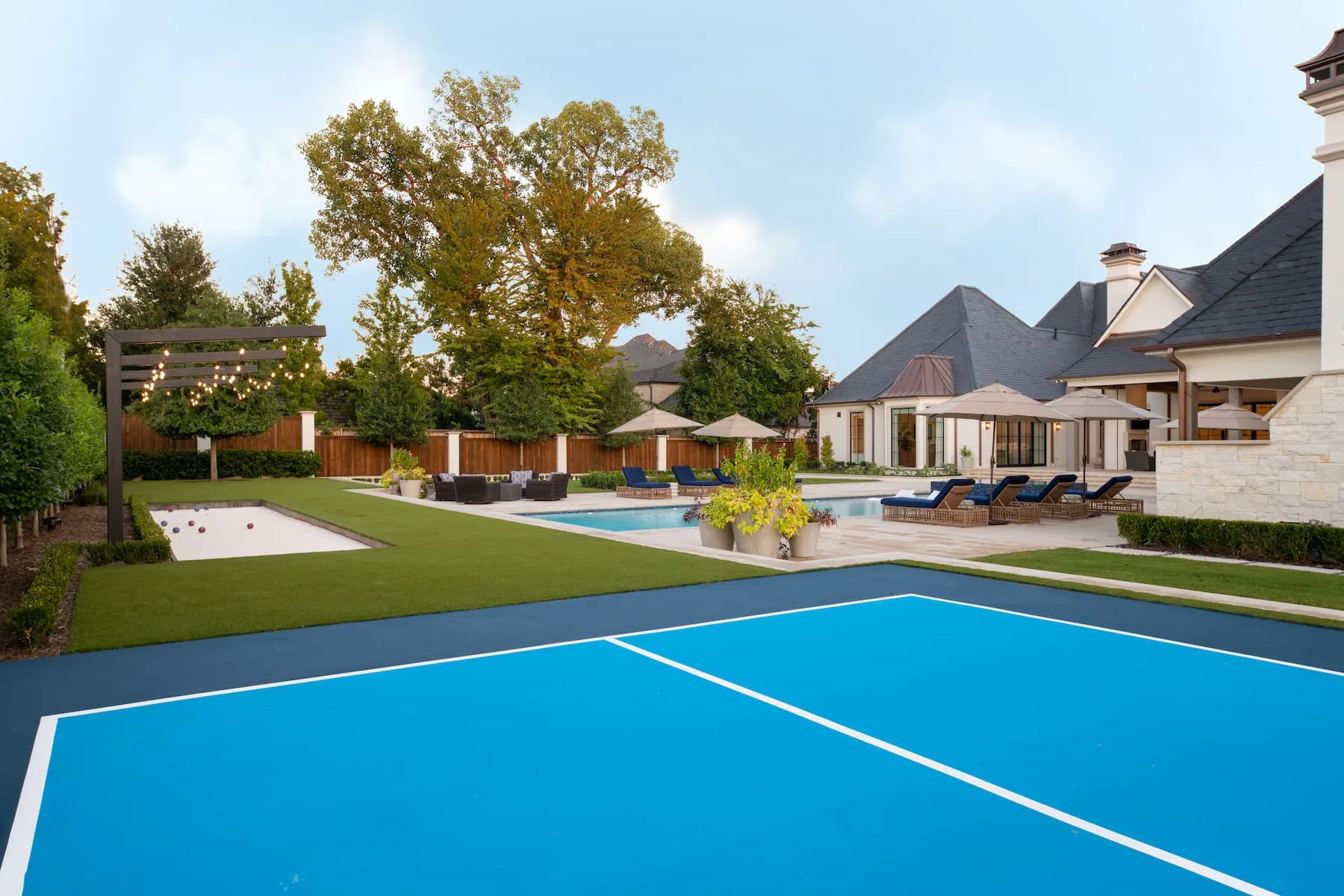
Picture this: it's Saturday morning in Preston Hollow. Instead of driving to crowded public courts, your family walks out to your private outdoor court — positioned perfectly between your pool and covered outdoor living area. Basketball practice for the kids happens while you're entertaining by the pool. Evening pickleball matches flow seamlessly into dinner on the terrace.
For Dallas luxury homeowners, a custom outdoor court isn't just an athletic amenity. It's a carefully integrated element of comprehensive outdoor living that works in harmony with your pool, spa, outdoor kitchen, and entertaining spaces.
But here's what separates a $60,000 disappointment from a $150,000 masterpiece: understanding how to integrate an outdoor multi-game court into luxury outdoor living before you break ground.
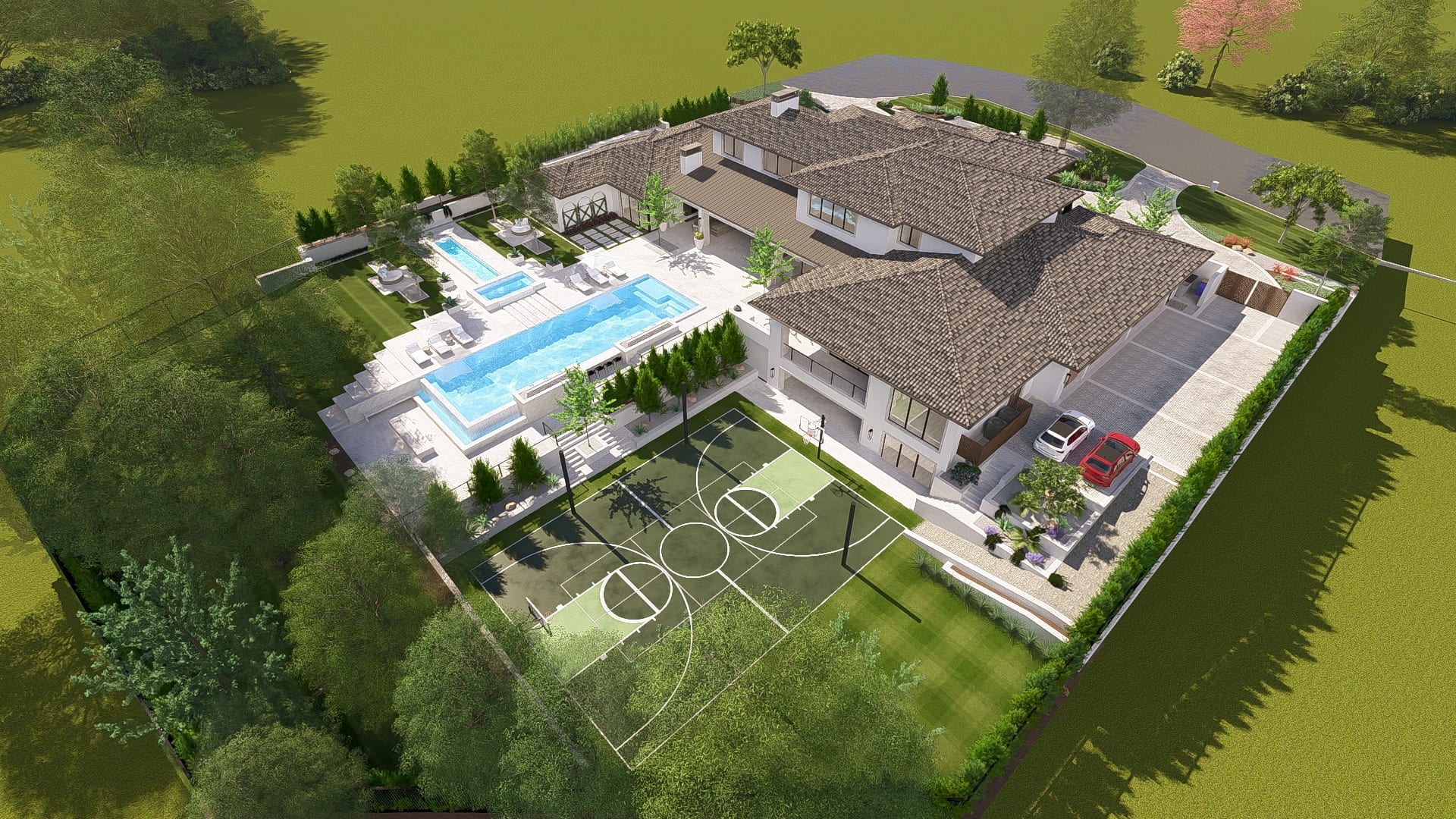
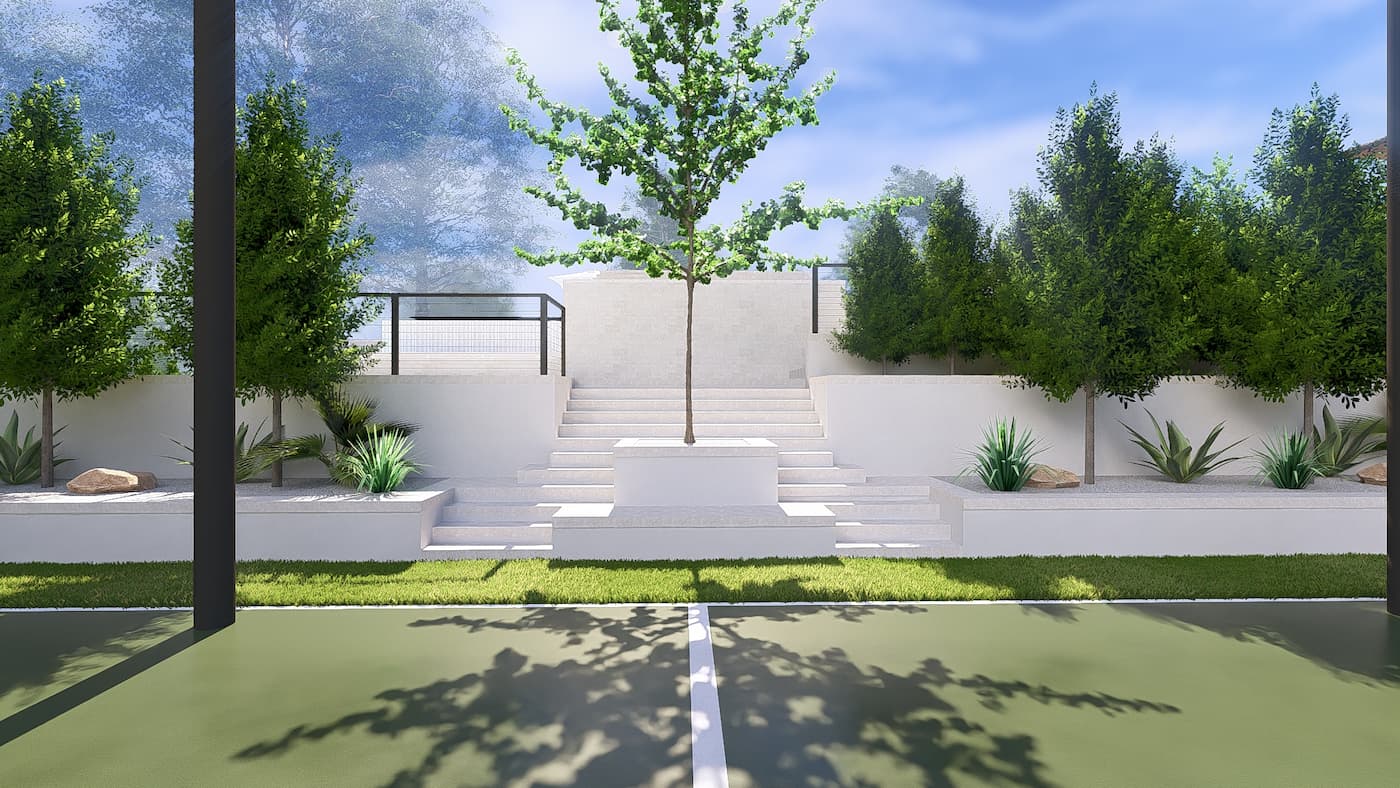
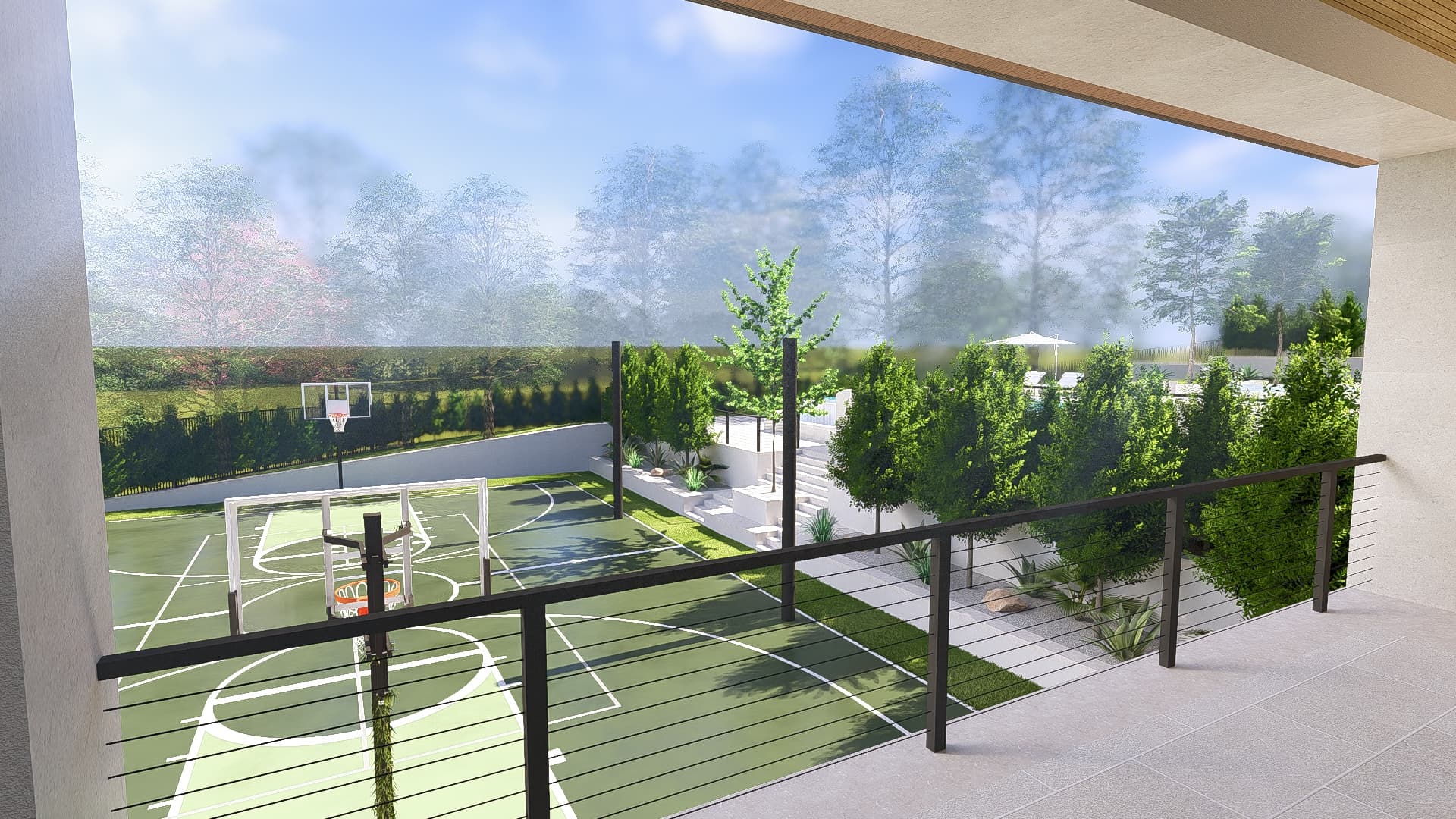
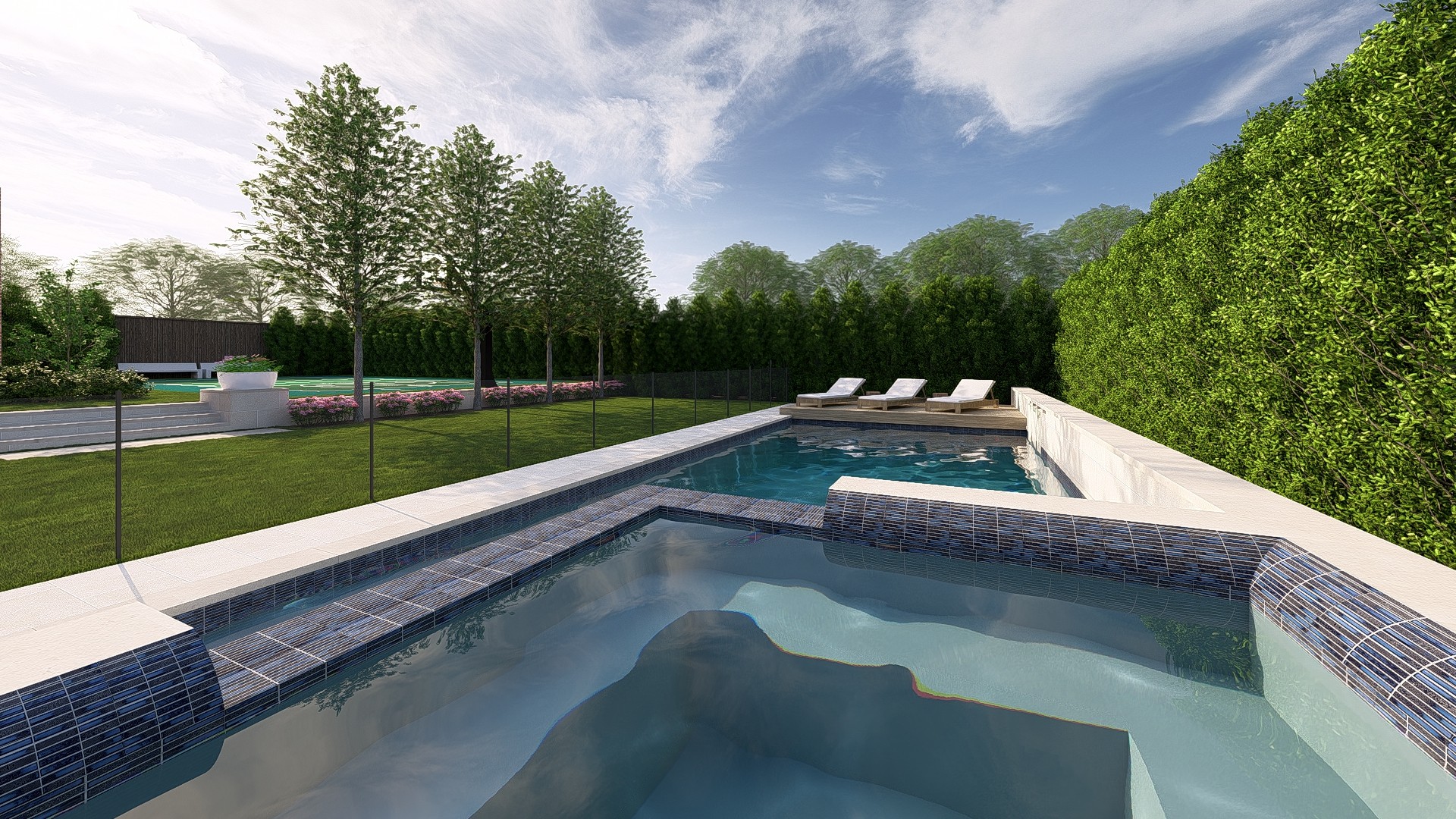
This landscape rendering was designed by Blount Designs. Schedule a free consultation — we'll walk your property and assess what's possible.
What Does Outdoor Court Design and Build Really Mean?
Outdoor court design and build is the process of creating a custom playing surface that accommodates basketball, pickleball, volleyball, and tennis within a single optimized space — designed to integrate seamlessly with your pool, spa, and outdoor living areas.
Unlike simply pouring concrete and painting lines, professional outdoor court design involves:
Strategic spatial planning — How the court relates to your pool, entertaining areas, and home architecture
Foundation engineering — Creating a stable base that handles Dallas clay soil and extreme temperature cycles
Material harmony — Selecting surfaces, fencing, and colors that complement your pool deck and outdoor living aesthetic
Integrated infrastructure — Coordinating electrical, drainage, and lighting with existing pool systems
Multi-sport line layouts — Color-coded lines for different sports without visual chaos
The result? A cohesive resort-style environment where your game court enhances rather than competes with your pool and outdoor living spaces.
What Is the Best Surface for an Outdoor Game Court in Dallas?
For luxury properties where the court neighbors your pool: post-tension concrete with premium acrylic coating.
Here's why this matters specifically in Dallas:
The Dallas Clay Soil Problem
Dallas sits on Blackland Prairie clay soil that expands up to 10% when wet and shrinks when dry. A standard concrete slab will crack — it's not if, but when.
For luxury properties where your outdoor court is adjacent to your pool and visible from primary living spaces, cracks aren't just structural failures — they're aesthetic failures that detract from your entire outdoor environment.
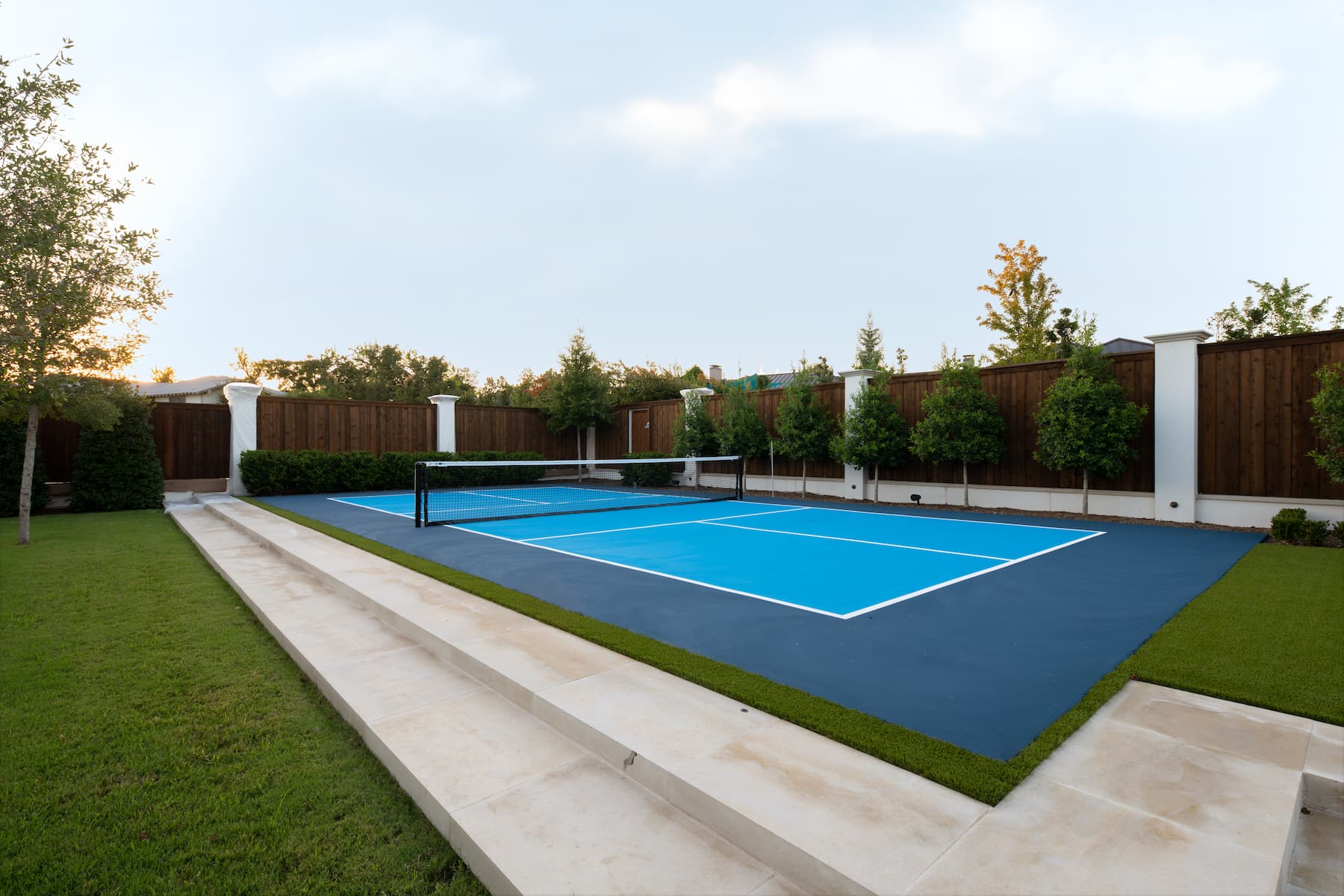
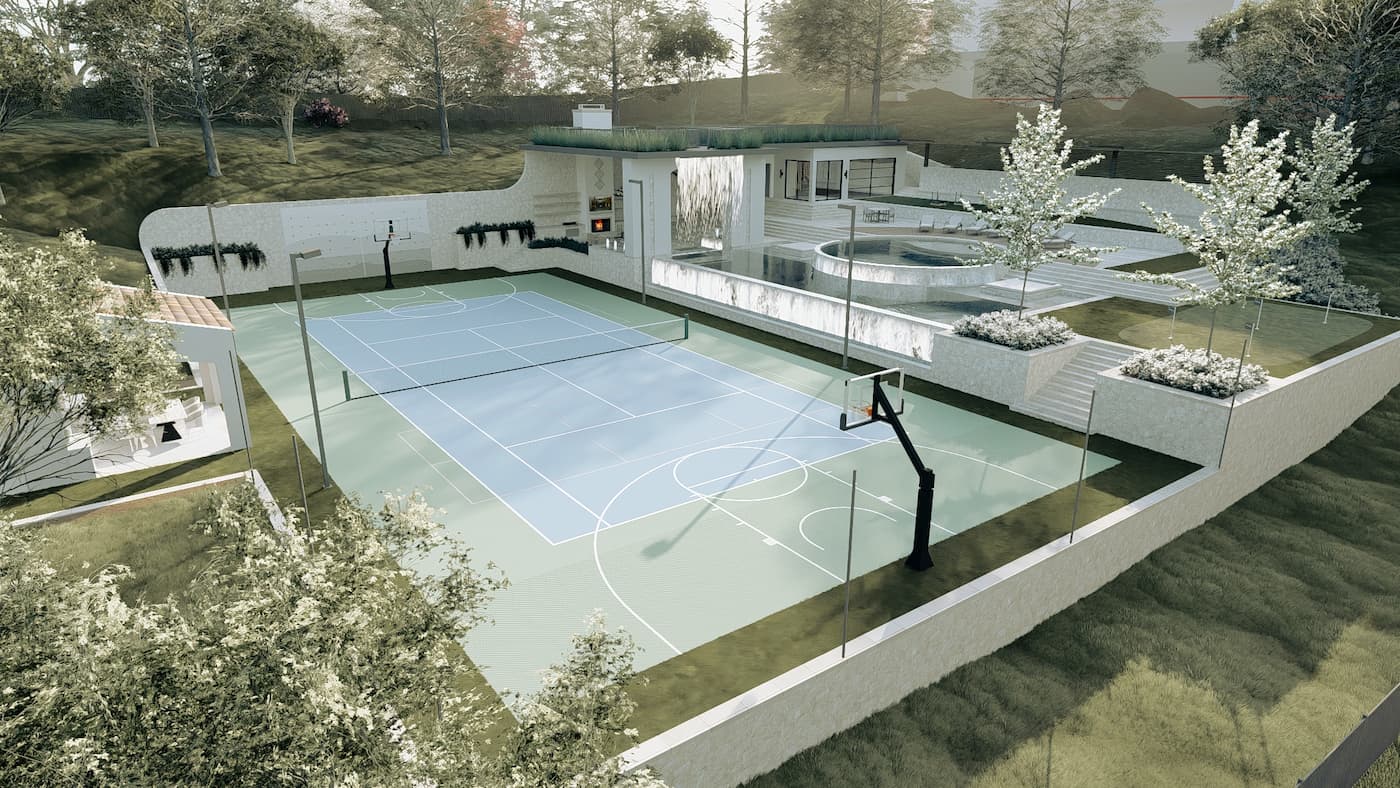
This project was designed and built by Blount Designs. Schedule a free consultation — we'll walk your property and help you see the potential.
Post-Tension Concrete: The Only Real Option
How it works: High-strength steel cables tensioned to 25,000-33,000 psi create compression that actively resists cracking despite soil movement.
Why it matters for pool-adjacent courts:
30+ year lifespan matching your pool's longevity
Minimal expansion joints for clean, professional appearance
Withstands Texas heat cycles and soil movement
Maintains the quality aesthetic expected in luxury settings
The premium: $21,000-35,000 more for a 3,500 sq ft court vs. standard concrete. On a multi-million dollar property, that's less than 1% of home value.
Surface Coating Options
Premium acrylic (like SportMaster):
Professional ball bounce and traction
Cushioned layers reduce joint impact
Custom colors to complement pool deck
8-10 year lifespan before resurfacing needed
Color strategy: Light colors (white, light gray, tan) stay 20-30°F cooler than dark surfaces — critical when your court is part of a pool environment where people are barefoot.
Modular tiles:
More forgiving on joints
Quick installation
Can be relocated
BUT: Higher cost, heat retention in Dallas summers, different feel than professional courts
For serious training or properties emphasizing aesthetics: Acrylic on post-tension concrete is the clear choice.
How Do You Integrate an Outdoor Recreational Court With a Pool and Spa Area?
This is where most court builders fail — they think in isolated surfaces, not integrated environments.
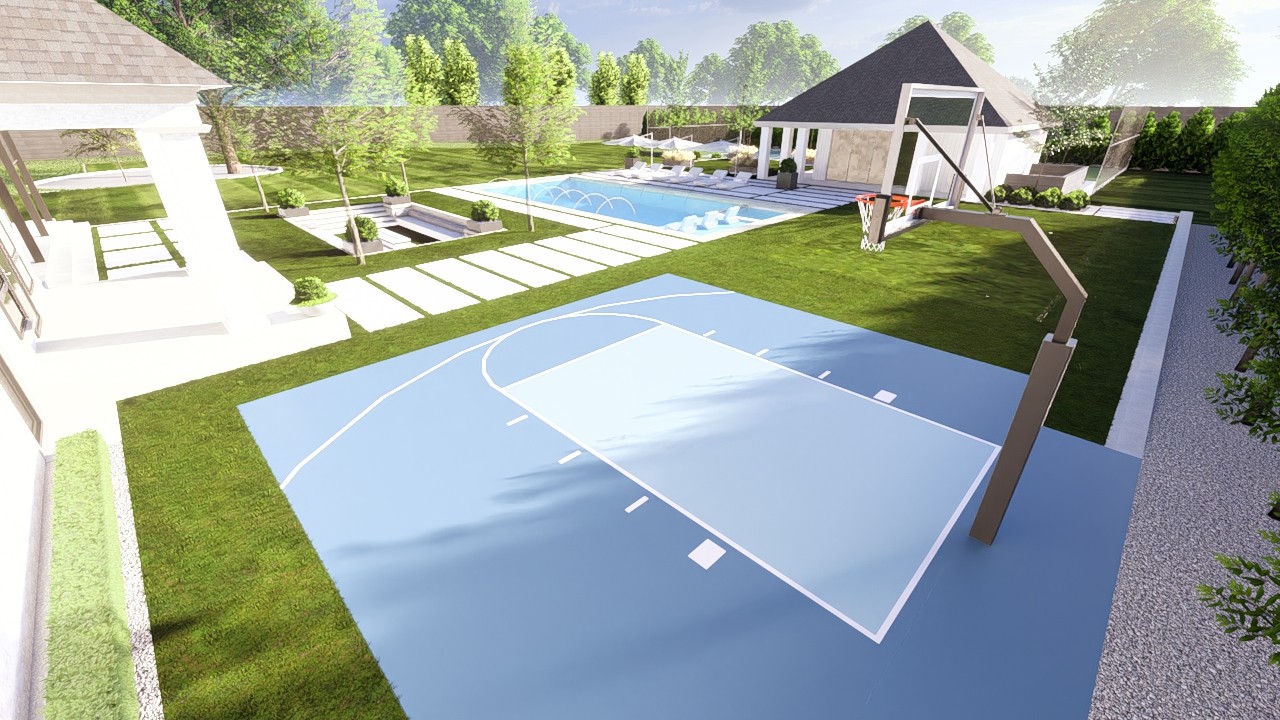
Spatial Planning That Works
Adjacent with visual separation: Position court 20-40 feet from pool area, using strategic landscaping (evergreen hedges, decorative screens, elevation changes) to create distinct zones while maintaining flow.
Shared circulation: Design pathways that connect pool deck → outdoor kitchen → court naturally without forcing guests through awkward routes.
Complementary orientation: Align court so activity doesn't dominate pool areas. One University Park estate positions their court parallel to their lap pool, creating a linear athletic compound.
Material Continuity
The best luxury designs echo materials between pool and court:
Pool deck travertine → Court perimeter in matching travertine
Dark plaster pool → Court surface in sophisticated charcoal/slate tones
Modern pool with glass tile → Contemporary cable rail court fencing
Traditional brick pool house → Court fence with matching brick pillars
Lighting Integration
Evening entertaining by the pool requires soft ambient lighting. Outdoor courts need bright functional lighting. The solution?
Separate circuits with smart controls:

Program "Pool Evening" scene: court lights off or 20%
Program "Court Play" scene: full intensity
Coordinate fixture finishes with pool cabana posts or outdoor kitchen structures
Shared Infrastructure Saves Money
When designed concurrently with pool:
Underground electrical conduit serves both
Integrated French drains handle all runoff
Retaining walls serve both pool surround and court elevation
Single permit and site mobilization
What Size Multi-Game Outdoor Court Works for Dallas Properties?
Luxury properties typically accommodate courts ranging from compact 40' x 60' installations to generous 60' x 90' courts, depending on available space and intended use.
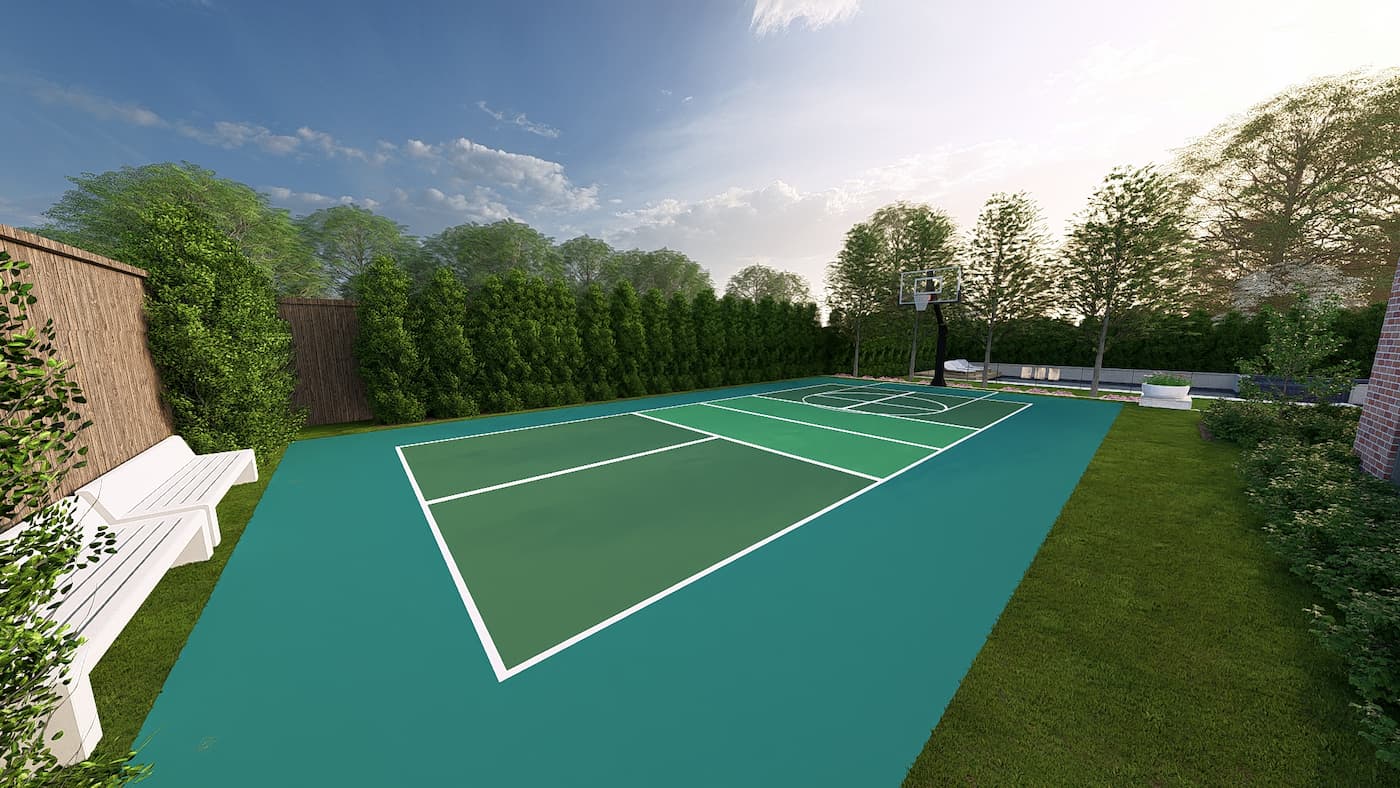
Regulation Dimensions:
Full-size basketball: 94' x 50' (NBA/NCAA regulation)
Half-court basketball: 47' x 50'
Pickleball: 44' x 20' (USA Pickleball standard)
Volleyball: 60' x 30' (regulation)
Tennis singles: 78' x 27'
Tennis doubles: 78' x 36'
Common Size Configurations:
30' x 50' — Half-court basketball + full pickleball (compact footprint)
40' x 60' — Half-court basketball + pickleball + volleyball (versatile option)
50' x 84' — Full basketball court + multiple sports (requires significant space)
Site Planning for Pool-Adjacent Courts:
Allow 10-15 feet between court and pool area for landscaping buffer, circulation paths, and visual separation. This spacing creates distinct zones while maintaining natural flow between amenities.
What Is the Best Surface for a Multi-Game Outdoor Court in Dallas?
For luxury properties where the court neighbors your pool: post-tension concrete with premium acrylic coating is the recommended choice.
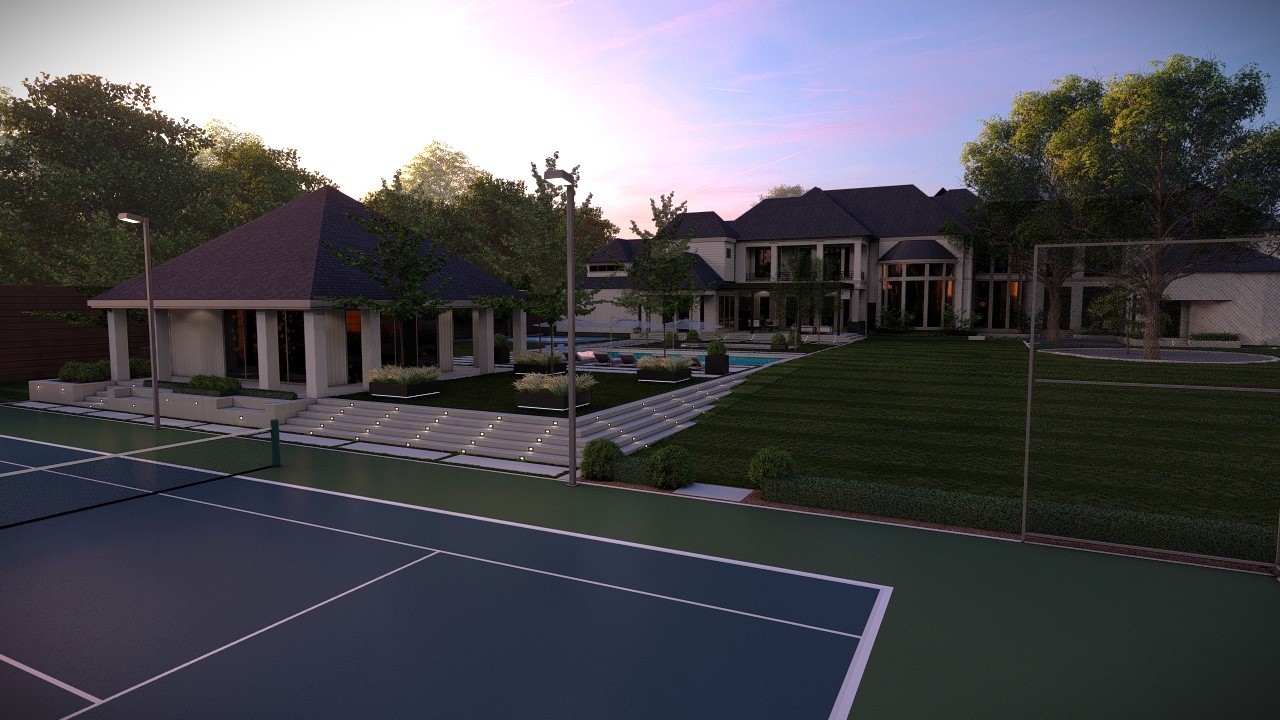
The Dallas Clay Soil Problem
Dallas sits on Blackland Prairie clay soil that expands up to 10% when wet and shrinks when dry. Standard concrete slabs crack over time on this soil — it's a when, not if situation.
For luxury properties where your outdoor court is visible from pool areas and primary living spaces, cracks aren't just structural issues. They're aesthetic failures that detract from your entire outdoor environment.
Post-Tension Concrete: The Best Foundation
High-strength steel cables tensioned to 25,000-33,000 psi create compression that actively resists cracking despite soil movement.
Why it matters:
30+ year lifespan matching your pool's longevity
Minimal expansion joints for clean appearance
Withstands Texas heat cycles and soil movement
Surface Coating Options
Premium acrylic (like SportMaster):
Professional ball bounce and traction
Cushioned layers reduce joint impact
Custom colors to complement pool deck
8-10 year lifespan before resurfacing
Color matters: Light colors (white, light gray, tan) stay 20-30°F cooler than dark surfaces — critical when your court is part of a pool environment where people are barefoot.
How Much Does It Cost to Build a Multi-Game Outdoor Court in Dallas?
The investment for a luxury multi-game outdoor court integrated with your pool and outdoor living varies based on decisions you make during planning. Understanding what drives costs helps you make informed choices aligned with your property and priorities.
Foundation and Surface
As covered in the surface section, your foundation choice is critical. Post-tension concrete costs similarly upfront to standard reinforced concrete ($4.50-5.00 per square foot) but performs dramatically better on Dallas clay soil, avoiding costly repairs later. Surface options range from basic asphalt to premium modular tile systems, each with different longevity and maintenance implications.
Site Preparation: The Variable That Changes Everything
This is where budgets often diverge from estimates.
Flat, accessible sites require minimal grading and standard drainage. Sloped or challenging properties need extensive excavation, substantial retaining walls, complex drainage engineering, and sometimes difficult equipment access requiring special machinery.
Texas contractors note site complexity can add tens of thousands to project costs—often the single largest variable in final investment.
Equipment and Finishes: Quality Spectrum
Each component has quality tiers that affect both initial investment and long-term satisfaction:
Basketball goals: Basic fixed-height to commercial-grade adjustable systems
Fencing: Functional chain-link to architectural metal with stone pillars matching pool area
Lighting: Basic illumination to smart-controlled LED systems with scene programming
Net systems: Portable to tournament-grade professional installations
Lower-quality equipment frustrates over time, while professional-grade enhances experience for decades.
Architectural Integration
Standard approach: Outdoor court specialist builds in isolation with generic materials.
Integrated approach: Designer coordinates materials with pool deck, architectural fencing, strategic landscaping, and integrated electrical/drainage systems.
At Blount Designs we design and build outdoor courts which become architectural feature complementing your outdoor living environment.
Planning Considerations
Permitting and HOA approvals: Municipal permits and master-planned community reviews can add weeks to months to timelines. Professional designers streamline this process.
Construction timing: Building concurrent with pool saves money through shared infrastructure but requires larger upfront investment. Adding to existing outdoor living spreads costs but increases total investment.
Long-term maintenance: Budget for acrylic resurfacing every 6-10 years, equipment maintenance, and drainage upkeep. Premium materials reduce long-term costs.
Key Questions for Planning
About your site: How much grading does terrain require? What retaining wall work is needed?
About priorities: Building with pool or adding later? Training vs. recreational balance? Luxury aesthetic vs. functionality?
To contractors: What's included vs. optional? How do you handle unexpected conditions? What warranty coverage?
Does an Outdoor Court Add Value to a Dallas Home?
Yes — with both measurable and lifestyle returns.

What Outdoor Courts Add to Home Value
Industry experts estimate outdoor courts add $10,000-$20,000 to home value in typical markets (HomeGuide, 2023), with luxury installations potentially adding significantly more. Tennis courts in high-end markets can add up to $150,000 (HomeGuide, 2023).
Return on investment: Outdoor courts typically recoup 30-50% of construction cost at resale (HomeGuide, 2023; Angi, 2025).
Research-backed data: A University of Michigan study found homes with improved outdoor features—including outdoor courts and comprehensive landscaping—had 11.3% higher values than comparable homes without these amenities.
Market considerations: Value impact varies based on:
Property location and price point
Quality of court design and integration with existing outdoor living
Buyer demographics (family-oriented markets see higher demand)
Maintenance condition at time of sale
In luxury markets where buyers expect resort-style amenities, professionally integrated outdoor courts that complement pools and outdoor living spaces become expected features rather than optional upgrades, contributing to faster sales and stronger negotiating positions.
What About Selling Speed?
Recreational outdoor courts make properties more memorable to family-oriented buyers. Real estate professionals observe homes with comprehensive outdoor amenities — pool, outdoor kitchen, AND game court — generate more showings and stronger offers.
The advantage isn't just speed — it's appeal and negotiating position. Properties with unique amenities attract multiple offers and resist price reductions.
The Real Value: Lifestyle ROI
Daily use: At 3-4 uses weekly, your cost per session drops to $50-100 over 10 years.
No membership fees, no driving to crowded courts, always available steps from your pool.
Social capital: Your property becomes the gathering place for family and friends.
Property distinction: In competitive luxury markets, comprehensive outdoor amenities make your home memorable.
Market Considerations
Where recreational courts matter most:
Family-focused suburbs (Frisco, Southlake, Plano): High demand from active families
Premier neighborhoods (Preston Hollow, University Park): Buyers expect resort-level amenities
Properties with integrated design: Outdoor Courts that complement pool and outdoor living design, not standalone add-ons
What Buyers Value
Integration quality, maintenance condition, functionality, and aesthetic appeal. Professional design matters — poorly integrated courts can detract from value, while beautifully integrated ones become selling features.
The Bottom Line
Outdoor courts add $10,000-$50,000+ in measurable value, enhance appeal to luxury buyers, and provide lifestyle benefits exceeding financial returns. When professionally integrated with your outdoor living environment, they become expected features in luxury properties.
What Are the Biggest Mistakes to Avoid?
1. Treating the Court as Separate from Pool Design
Work with designers experienced in comprehensive outdoor living who treat courts as one element of your resort environment — not isolated specialists.
2. Choosing Standard Concrete in Dallas
Dallas's expansive clay soil causes standard concrete to crack over time. Post-tension concrete is recommended for properties where longevity and appearance matter.
The math: $21,000-35,000 more upfront for a 3,500 sq ft court — minimal on a multi-million dollar property.
3. Ignoring Drainage Integration
Not coordinating court drainage with pool area drainage creates water pooling and erosion problems. Design both systems together.
4. Dark Surface Colors
Dark court surfaces absorb heat and become uncomfortably hot during Dallas summers when your pool is most active. Light-colored acrylic coatings stay 20-30°F cooler.
5. Poor Lighting Design
Bright game court lights that spill into pool areas ruin evening ambiance. Use separate circuits, smart controls, and full-cutoff fixtures that direct light downward only.
How Long Does It Take to Build a Recreational Outdoor Court?
Building Pool and Court Together:
16-24 weeks from design to completion
Shared infrastructure
Single site mobilization
Cost savings from combined project
Adding Court to Existing Pool:
10-14 weeks for prepared sites
2-4 weeks: Design and permitting
1-2 weeks: Site prep and drainage
1-2 weeks: Concrete foundation
1-2 weeks: Retaining walls (if needed)
3-5 days: Surface coating
1 week: Equipment and lighting
Note: Timelines vary based on site complexity and weather. Schedule during spring or fall for optimal concrete curing.
Your Next Step: From Vision to Reality
Creating a recreational outdoor court that seamlessly integrates with your Dallas property's pool, spa, and outdoor living environment requires more than technical expertise. It requires design vision that treats your entire outdoor space as a cohesive resort-style retreat.
The difference between an outdoor court that feels like an add-on and one that feels like an intentional part of your estate comes down to one thing: comprehensive design from the beginning.
Explore what's possible for your property → Schedule Your Free Consultation
During your consultation, we'll:
Walk your property and discuss your vision
Show you examples of integrated game court designs
Provide preliminary ideas for your specific site
Discuss realistic timelines and investment levels
Answer all your questions about the design and build process
Your Dallas property deserves outdoor living that works as a cohesive whole — not a collection of disconnected features. Let's create something exceptional together.
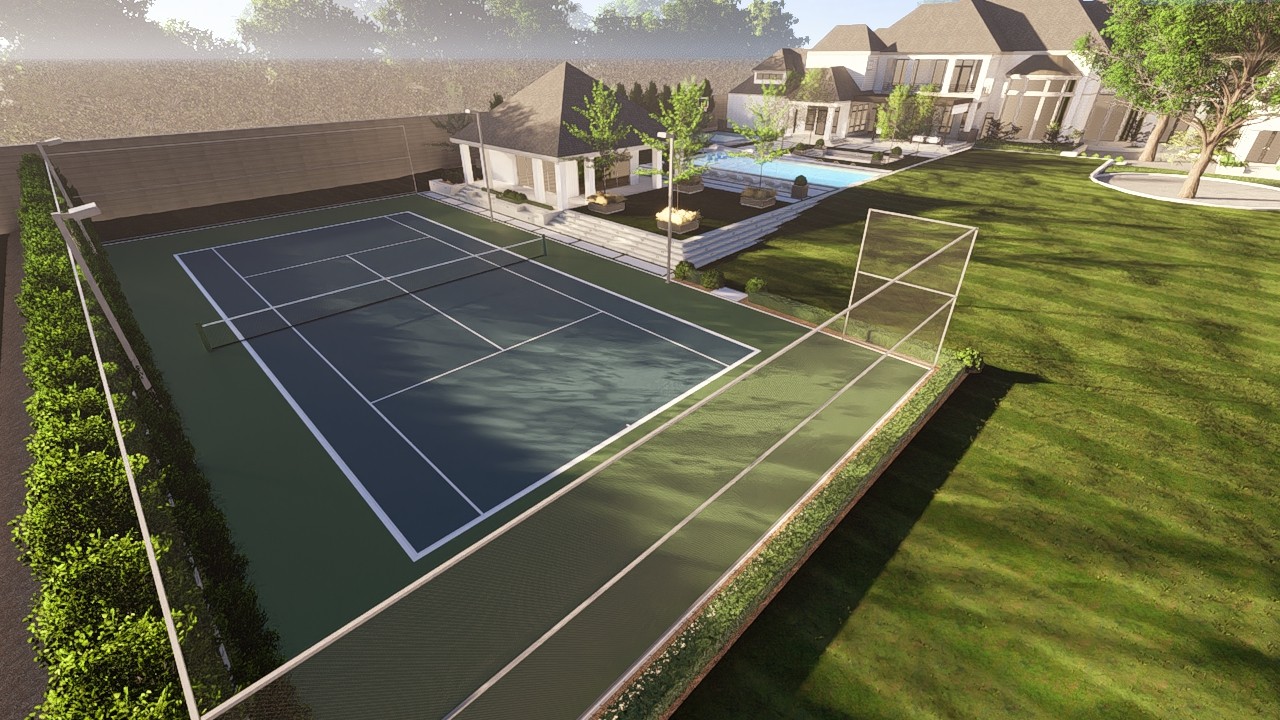
*All renderings featured in this article were designed by Blount Designs for homeowners in Dallas-Fort Worth and surrounding areas. Curious what's possible on your property? Schedule a free consultation — we'll walk your property and assess your vision together.
Related