Design
What Does a Landscape Designer Do?
-
Blount Designs
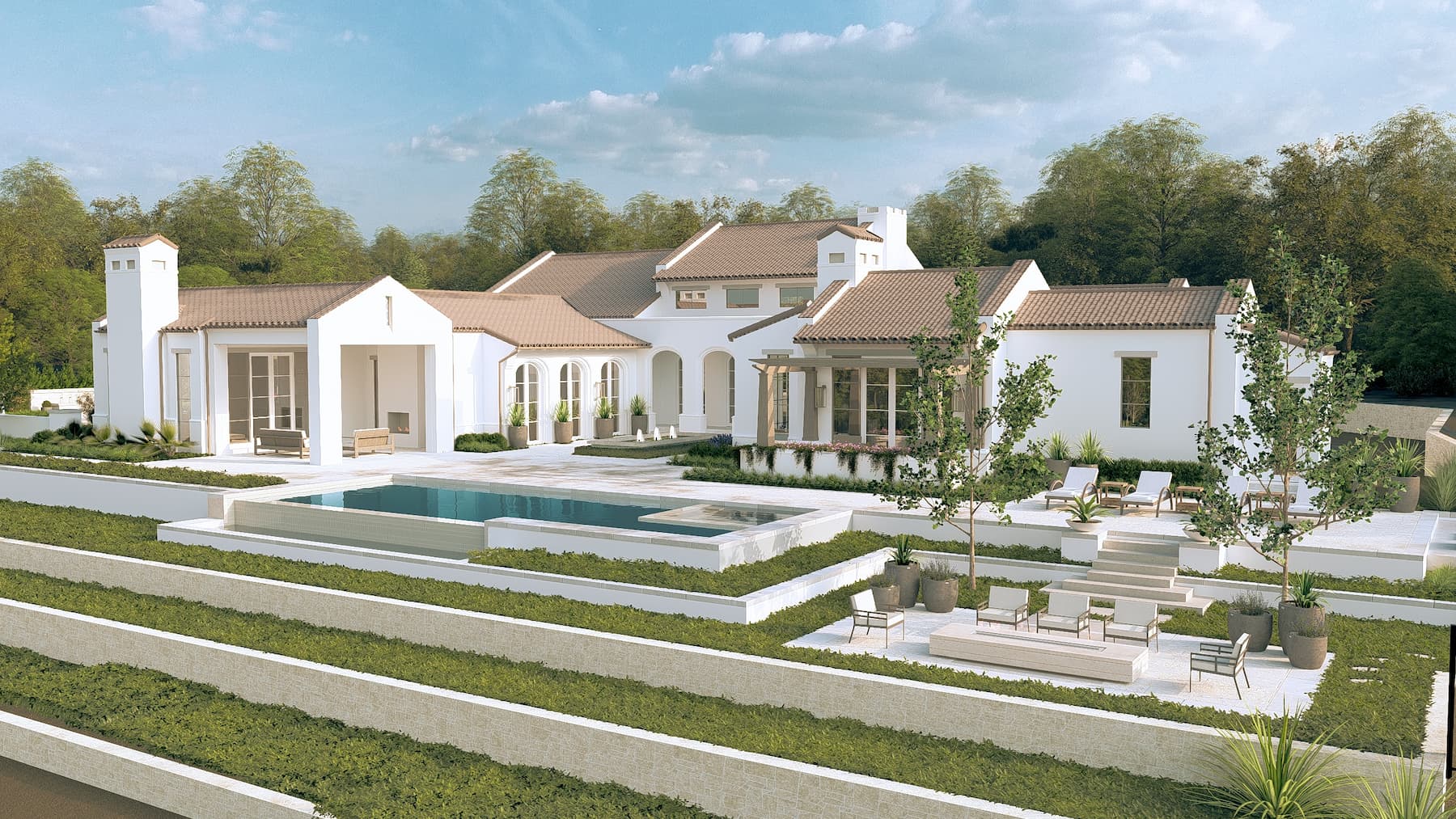
A landscape designer creates comprehensive plans for outdoor spaces — covering plant selection, hardscape layout, grading, drainage, lighting, and spatial flow. They translate your property's potential into construction-ready designs, and with modern design tools, they can show you exactly how it will look before anything is built — including 3D renderings and aerial flyover videos of the finished design.
The Short Answer for Complex Properties
If your North Texas property is over half an acre, has significant grade changes, or you're investing $50,000 or more in outdoor improvements, a landscape designer isn't optional — they're the difference between a cohesive estate and an expensive collection of unrelated decisions.
A designer brings three things a contractor alone cannot: a master plan, horticultural expertise, and an objective eye for how your outdoor spaces will function and age over time. And before a single contractor is hired, you'll be able to see a photorealistic 3D rendering of your finished property — and walk through it.
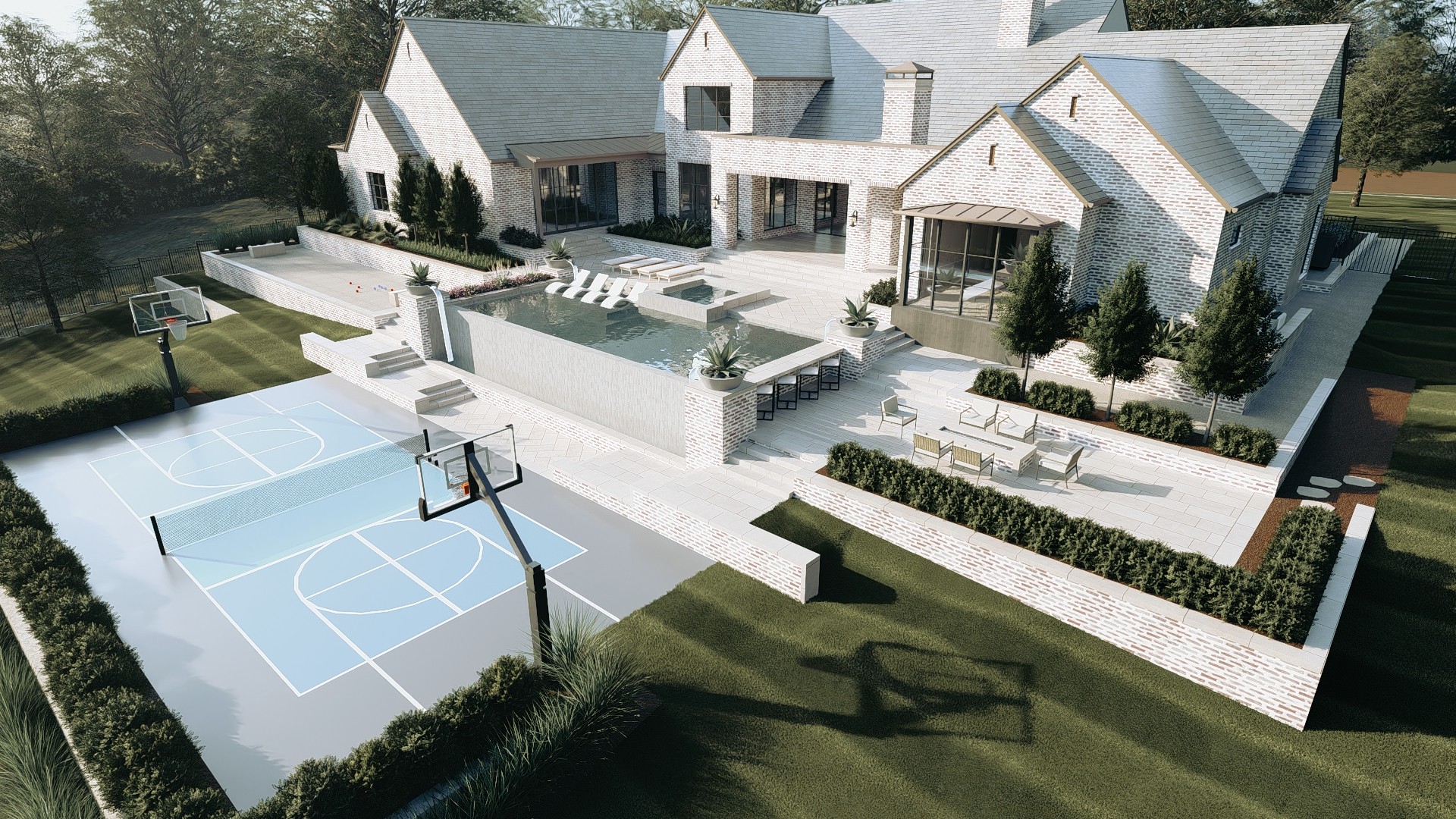
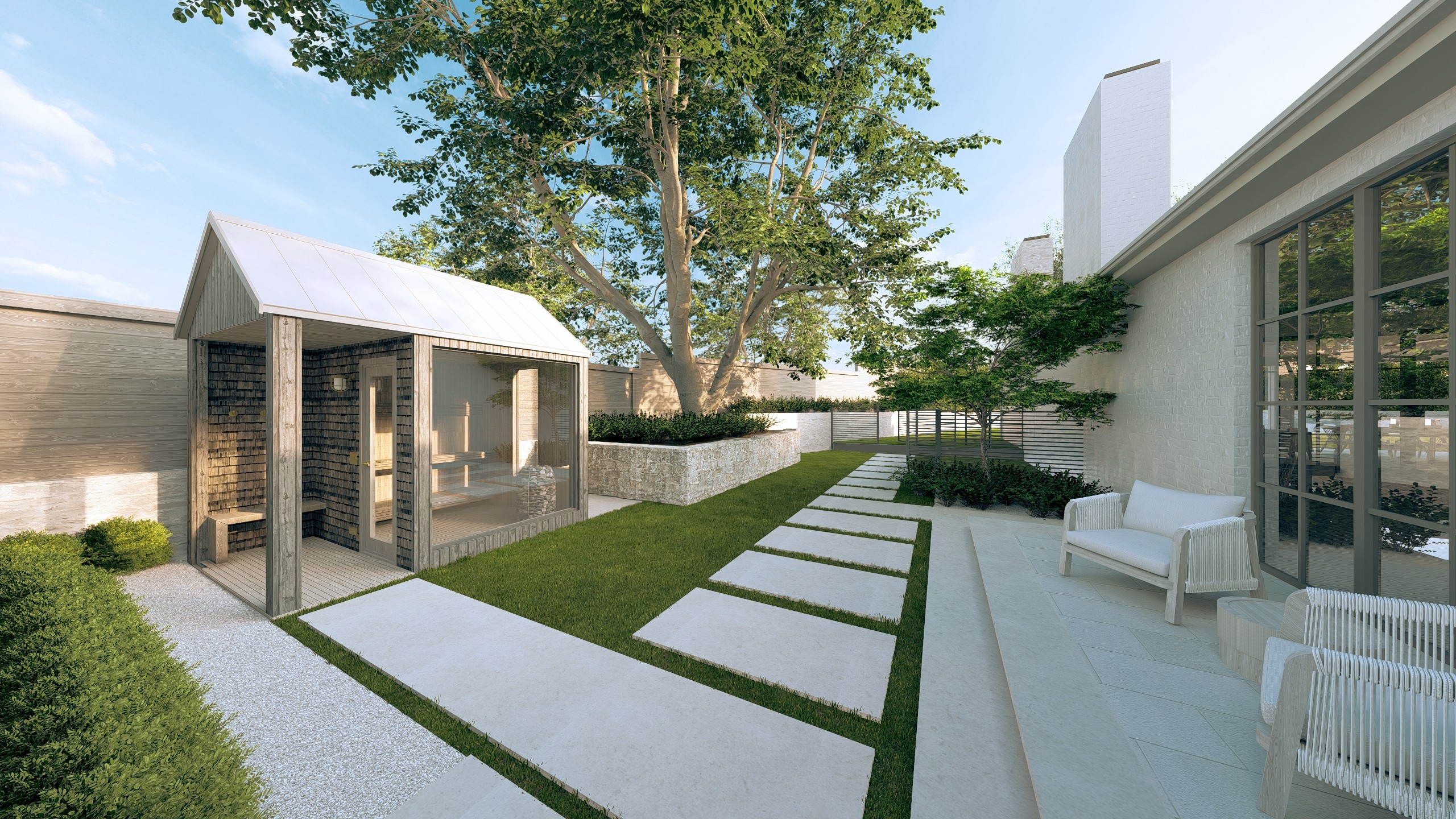
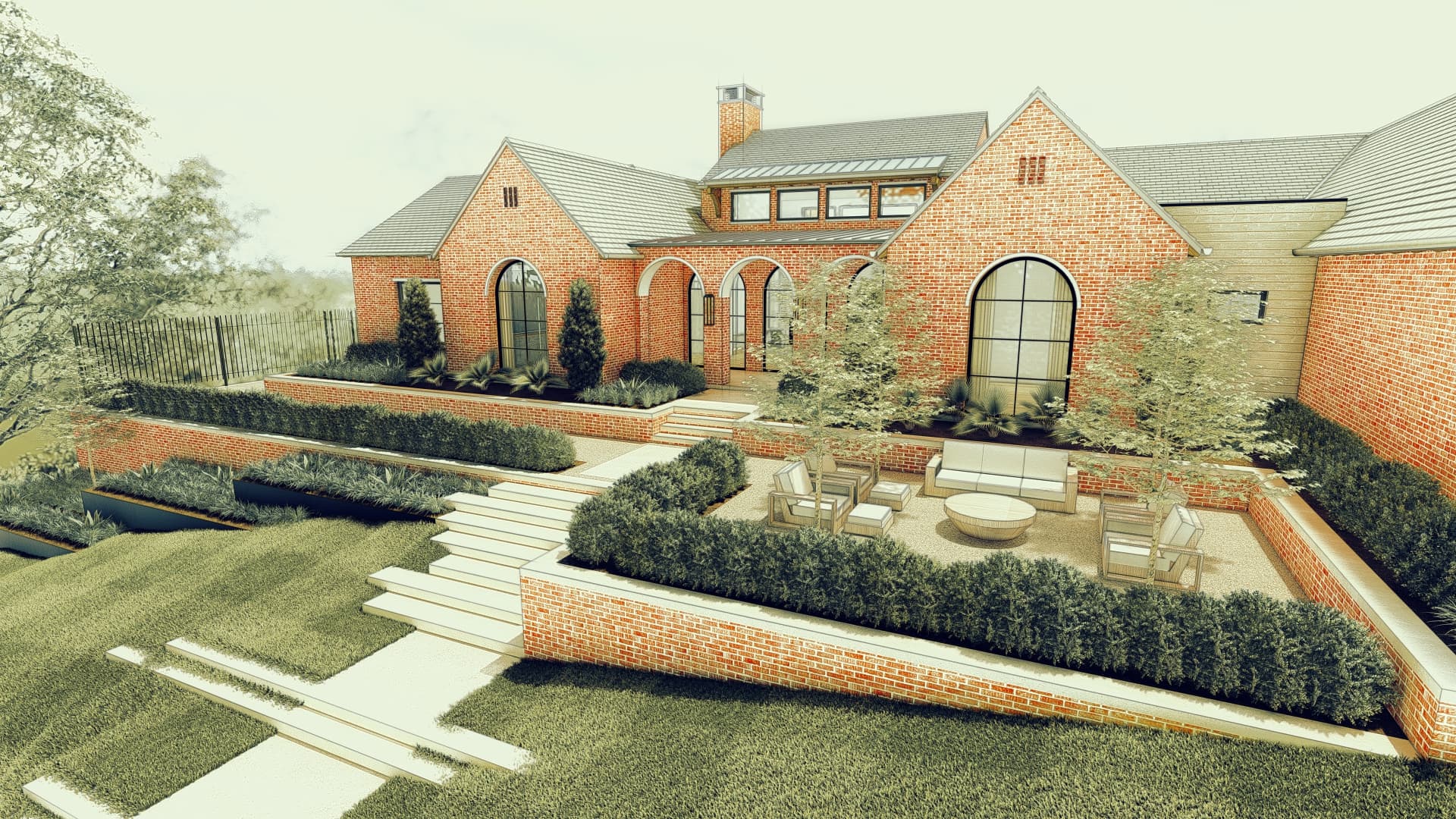
This is an example of 3D design work by Blount Designs.
What a Landscape Designer Actually Does
Site Analysis
Before any design work begins, a landscape designer conducts a thorough site assessment. This includes:
Topography and drainage patterns — where water moves, pools, and exits your property
Soil composition — what will and won't grow successfully without expensive amendments
Sun and shade mapping — seasonal light changes that determine plant placement and outdoor living viability
Existing infrastructure — irrigation lines, utilities, mature trees with root zones worth protecting
Viewsheds — what you see from inside the home, and what neighbors or passersby see from outside
This phase prevents the single most common expensive mistake in landscape projects: building something beautiful that doesn't survive its second season, or worse, creates drainage or structural problems down the line.
3D Renderings and Property Flyovers
One of the most significant advances in residential landscape design is the ability to visualize a completed project before construction begins. A landscape designer using current design software can produce:
3D renderings — photorealistic still images of your property showing exactly how plantings, hardscape, lighting, and structures will appear at completion, including how mature plants will look years down the line
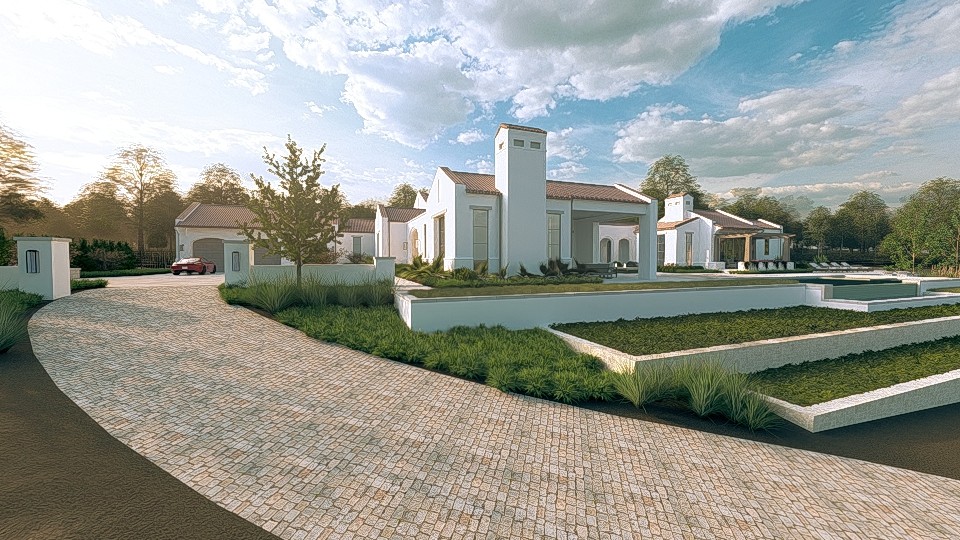
Aerial flyover videos — animated walkthroughs of your property from above and at ground level, so you can experience the spatial relationships, sightlines, and scale of the design before anything is built
This matters for two reasons. First, it eliminates guesswork. You're not approving a flat plan and hoping it translates well in three dimensions — you're seeing the finished result and signing off on it. Second, it surfaces problems early. A patio that reads fine on paper can feel undersized or poorly oriented in a 3D view. A privacy screen that looks adequate from one angle may leave a critical sightline exposed from another. These are discoveries you want to make on a screen, not after installation.
For clients managing projects across multiple stakeholders — spouses with different visions, interior designers, architects, or contractors who need to understand design intent — the flyover video becomes a shared reference point that eliminates ambiguity.
Master Planning
A landscape designer develops a master plan — a scaled, detailed document that maps the entire property. This isn't a mood board. It's a working document that shows:
Hardscape placement (patios, walkways, walls, driveways)
Planting zones and species selections
Grading and drainage solutions
Lighting positions and intent
Irrigation zones
Privacy screening and sightline management
Phasing strategy if the project will be built over multiple seasons
The master plan allows you to make every major decision on paper before a single piece of equipment touches your property. Changes on paper cost nothing. Changes during construction cost significantly.
Plant Selection and Specification
This is where horticultural training matters. A landscape designer selects plants based on:
Climate zone and microclimate conditions specific to your site
Mature size — a common mistake is planting for how things look at installation, not how they'll look in 10 years
Seasonal interest — ensuring the property has visual depth across all four seasons, not just spring
Maintenance requirements relative to your staffing or personal preferences
Ecological compatibility — plants that support each other and the local environment
For luxury properties, plant specification also includes sourcing decisions: specimen trees, large-caliper material, and rare cultivars that give an estate its distinctive character rather than a catalog look.
Hardscape and Structural Design
Landscape designers work on the built elements of your outdoor spaces — often collaborating with or directing contractors on:
Terracing and retaining walls for sloped properties
Patio and terrace layout for flow from interior spaces
Pool surrounds and integration with plantings and privacy
Outdoor kitchen and living structure placement
Driveway and motor court design
Water features — ponds, fountains, naturalistic streams
The designer ensures these elements relate to the architecture of the home, rather than appearing as additions bolted on after the fact. Scale, material palette, and proportion are deliberate choices that distinguish a designed estate from a series of contractor decisions.

Recreational Areas and Outdoor Living Flow
Outdoor game courts — tennis, pickleball, basketball, and multi-sport configurations — are among the most requested features on luxury North Texas estates, and among the most commonly mishandled. Not because the construction is complicated, but because placement decisions made without a design framework create problems that are expensive and sometimes impossible to fix.
A standard pickleball court runs 60 by 120 feet including buffer space. A tennis court is larger. These are significant land commitments, and where they land on a property determines everything that happens around them: sight lines from the house, noise impact on outdoor living areas, lighting bleed at night, and how gracefully — or awkwardly — the court connects to everything else.
A landscape designer approaches recreational structures as part of a complete outdoor ecosystem, not as a standalone feature to squeeze in. That means solving for:
Orientation — tennis and pickleball courts should run north-south to keep the sun out of players' eyes during peak afternoon use. On properties where true north-south isn't possible, a designer works around the constraint early, not after the pad is poured.
Sight lines from the house — on a property with children, the ability to watch the court from the kitchen, the pool deck, or the main terrace is a functional priority. This is a layout decision made at the master plan stage.
Entertaining flow — the path from interior kitchen to outdoor kitchen to pool to court to guest parking is a sequence that either works or it doesn't. A designer maps the flux of a large gathering: where people congregate, where they move, where they need shade, seating, and access to food and drinks without crossing back through the house.
Visual softening — a court is a large plane of hardscape. Without deliberate planting buffers, screening structure, or grade separation, it reads as utilitarian in an otherwise refined landscape. Done well, it disappears into the property.
Lighting design — court lighting that works for evening play without washing out the rest of the property at night is a coordination challenge between the designer, lighting consultant, and electrician. It's rarely handled well when each party makes decisions independently.
North Texas gives you roughly 230 days of sunshine annually. Outdoor amenities here aren't seasonal — they're year-round infrastructure. A designer who works regularly with this climate and with clients at this lifestyle level understands how these spaces actually get used: the weekend tournament with extended family, the evening practice sessions, the way a property with a well-placed court becomes the gathering point for an entire social circle. That understanding is what separates a plan that looks right on paper from one that works the way you actually live.
Construction Documentation and Contractor Coordination
A landscape designer produces the documents contractors need to build accurately: planting plans, grading plans, construction details, and specifications. Without these documents, contractors bid and build based on assumptions — and assumptions are where budgets break down.
During construction, a designer typically:
Reviews contractor bids for scope accuracy
Conducts site visits at key phases to confirm work matches the plan
Makes field adjustments when site conditions require it
Approves plant material before installation
This oversight function alone often saves clients more than the designer's fee.
Landscape Designer vs. Landscape Architect: What's the Difference?
For a luxury property owner, this question is really asking something more specific: is this person sophisticated enough to handle a project of this scale, this complexity, and this standard?
Landscape architects hold a licensed professional degree and are legally authorized to stamp and seal construction documents in most states. For projects involving significant civil engineering — large permitted retaining structures, regulated wetlands, or major grading requiring approved drawings — their licensure is either required or strongly advisable. Many practice residentially and bring exceptional technical depth to complex sites.
Landscape designers typically hold degrees in horticulture, environmental design, or related fields. The scope of residential work — even at the estate level — falls well within that expertise in the vast majority of cases. Where a project edges into territory that requires licensed engineering, a good designer knows it early and brings the right specialist in. The two disciplines collaborate regularly on serious projects.
What neither credential tells you on its own is whether the person understands your property at the level that actually matters for a project like this. Whether they've worked at your scale. Whether they understand what it means to design for a family that entertains seriously — forty people on a Tuesday evening, a full weekend with three generations, a social calendar that runs October through April outdoors. Whether they know how to make a property perform at that level without looking like it's trying to.
That's the question worth asking. And the answer lives in their portfolio and in the conversation, not on a license.
At Blount Designs, our work spans high-end residential estates and collaborative projects with commercial developers and builders — including projects where we've worked alongside licensed architects as part of a full design team. That experience informs how we approach documentation, coordination, and precision on every project we take on.
When the Investment in Design Pays for Itself
You're doing a phased project. A master plan created at the start allows you to build in phases without having early work block later phases or require demolition. The plan is created once; the build happens over years.
You have a complex site. Slope, poor drainage, mature trees, irregular property lines, adjacency to neighbors — any of these conditions benefit significantly from professional design thinking before construction begins.
You care about resale value. Professionally designed and maintained landscapes consistently add measurable value to luxury properties. According to research published by the American Society of Landscape Architects, landscaping can return 100–200% of its cost in added property value, with professionally designed properties performing at the higher end of that range.
You've already done it once and weren't happy with the result. The most common reason clients hire a designer is that they've already spent money on plantings or hardscape that didn't come together the way they envisioned. Design first prevents the do-over.
If you're weighing whether professional design makes sense for your project, this is the right conversation to have early. Tell us about your project →
What the Design Process Looks Like, Start to Finish
Initial Consultation Site visit, property assessment, and a direct conversation about your goals, lifestyle, maintenance preferences, and aesthetic direction. This is where we determine what the property needs and whether we're the right fit for the project. Schedule a consultation with Blount Designs →
Concept Design We present a concept plan showing the overall layout and direction. This is the time for feedback and major revisions. You're approving direction, not fine detail.
Design Development The concept becomes a detailed master plan with plant lists, material specifications, phasing recommendations, and 3D renderings or flyover video. Construction documents are produced during or after this phase.
Contractor Bidding and Construction We help you select qualified contractors, review bids, and oversee the build to ensure the plan is executed correctly.
What to Expect When Working with Blount Designs
At Blount Designs, every project starts with a thorough site analysis and a direct conversation about how you actually use — and want to use — your outdoor spaces. We work primarily with residential clients on properties where design quality and long-term performance matter, and we bring the same documentation standards and coordination discipline we've developed working alongside architects and commercial builders.
Our process produces a master plan you own — a document detailed enough to build from in phases, precise enough to eliminate ambiguity between design intent and construction execution. Unlike a design-only firm, we also offer full build services, which means the vision we create on paper is one we're equipped to execute, with no translation loss between designer and contractor.
If you're at the stage of evaluating whether design makes sense for your project, a [consultation] is the right place to start. We'll be direct about what your site needs and what kind of investment you're looking at before any commitment is made.
Frequently Asked Questions
What does a landscape designer do?
A landscape designer assesses your property, develops a master plan covering hardscape, planting, drainage, lighting, and spatial layout, and produces construction-ready documents for contractors to execute. They also provide 3D renderings and aerial flyover videos so you can see exactly how the finished design will look before anything is built.
Do I need a landscape designer or a landscape architect?
For most residential projects, including large and complex estates, a landscape designer has the expertise required. A landscape architect is typically necessary when a project requires legally stamped civil engineering documents — for instance, large retaining structures, regulated wetland work, or major permitted grading. If you're unsure, a designer can tell you early in the process whether an architect needs to be brought in.
What is included in a landscape design plan?
A complete landscape design plan typically includes a scaled site plan, hardscape layout, grading and drainage design, planting plan with species specifications, lighting plan, irrigation zoning, and phasing recommendations. It may also include 3D renderings, flyover video, and construction details depending on project scope.
How long does the landscape design process take?
Most residential design projects run 10 to 16 weeks from initial consultation to construction-ready documents. Simpler projects can move faster; large estates with significant scope or multiple stakeholders typically take longer.
How much does landscape design cost?
Design fees vary by project scope, property size, and level of documentation required. The more useful way to think about it: a well-executed design fee is almost always recovered through better contractor bids, fewer change orders, and avoided mistakes during construction. The cost of not designing first tends to be higher. Talk to us about your project →
Can I see what my property will look like before construction starts?
Yes. Using current landscape design software, a designer can produce photorealistic 3D renderings and aerial flyover videos showing your finished property — including how mature plantings will look years after installation. This is a standard part of the design process at Blount Designs.
Can a landscape designer help plan a sport court or multi-sport court?
Yes, and the design input matters most at the placement stage — before anything is graded or poured. Court orientation, sight lines from the house, connection to pool and entertaining areas, lighting, and planting buffers are all decisions that affect how the finished property functions and how it looks. A designer integrates the court into the master plan from the start rather than treating it as a separate project.
Does Blount Designs handle both design and construction?
Yes. We offer full design-build services, which means we can take a project from initial concept through completed installation. Clients who want a single point of accountability from the first site visit to the final walkthrough work with us through the entire process. Explore our completed full design-build projects →
Related