Improvement
2026 Landscape Design Trends Shaping Outdoor Living in Dallas–Fort Worth
-
Blount Designs Team
Landscape design in Dallas–Fort Worth is moving in a clear direction for 2026: outdoor space is being treated as a designed extension of the home, built to be used across the whole year rather than a few pleasant weeks. The strongest 2026 landscape design trends in DFW share a common thread — restraint, wellness, and climate intelligence — over the flash of previous years. For homeowners planning a project, knowing where the design conversation is heading makes it easier to invest in choices that will still feel right several seasons from now. These are the trends shaping the best outdoor spaces across North Texas this year.
If you want to see how these ideas come together on a real property, our outdoor living and recreation work is the place to start.
What Are the Biggest Landscape Design Trends for 2026?
The unifying idea across every trend below is intention: fewer elements, chosen well, designed to work together and to perform in the North Texas climate. Here is where design is heading in 2026.
1. Year-Round Outdoor Living
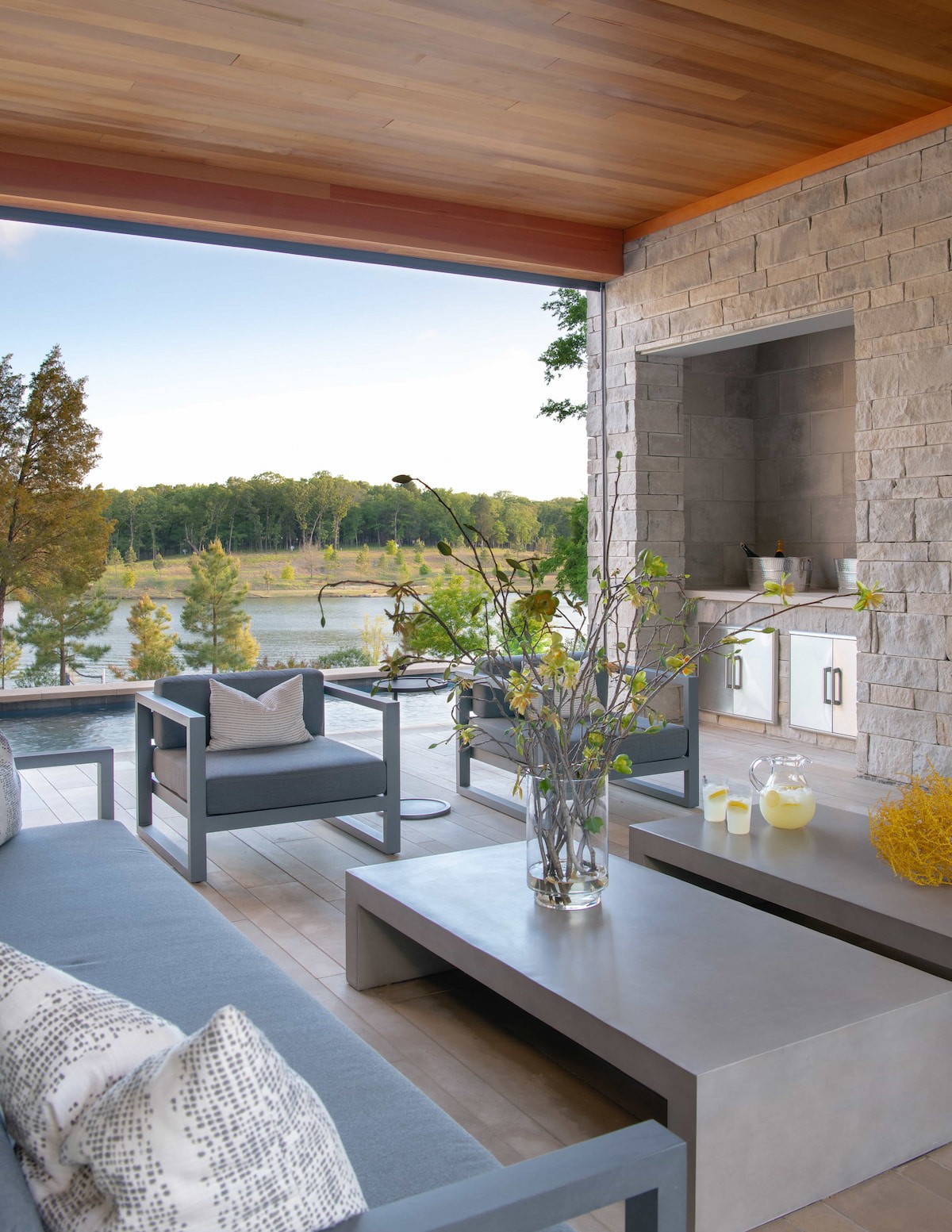
The single biggest shift is designing for the full calendar. Homeowners want spaces usable well beyond spring and fall, which means covered structures with heaters and fans, layered shade, heat-resistant surfaces, and fire features positioned for prevailing wind. The kitchen, lounge, and pool are planned as one connected environment rather than separate features, so the space earns its keep in July heat and January cool alike. Practically, this changes the plan early: shade and shelter get located before the furniture, drainage is resolved around the covered zones, and the transitions between sun and shade are designed rather than left to chance.
2. Wellness and Retreat Spaces
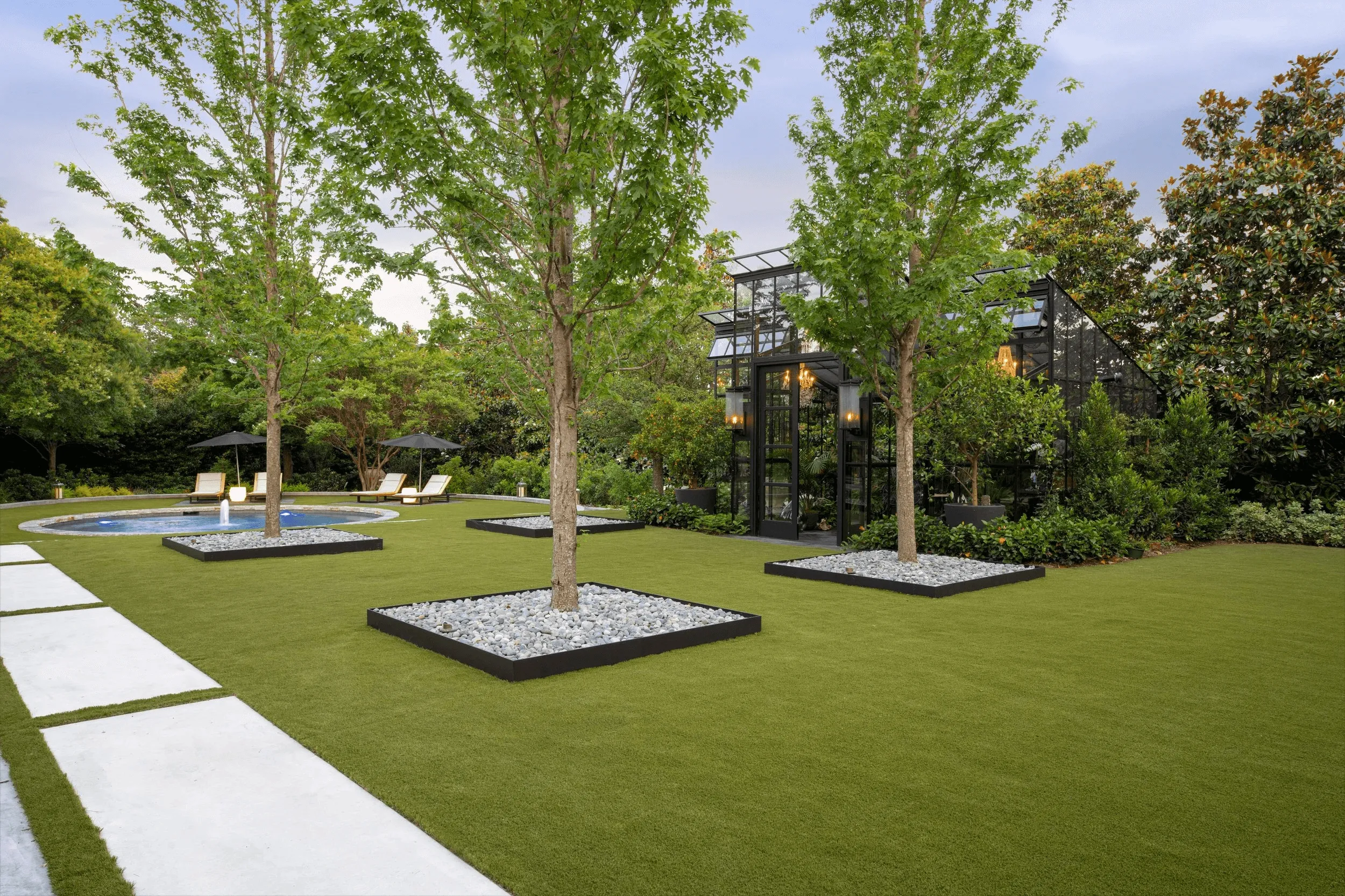
Wellness has moved from a nice-to-have to a design driver. Cold-plunge pools, saunas, yoga decks, and private courtyard settings with water features are increasingly written into the program from the start. The goal is a backyard that functions as a genuine retreat, and it pairs naturally with the move toward compact water elements and quiet, enclosed garden rooms. The most successful wellness spaces are zoned for privacy and calm — screened from sightlines, softened with planting and the sound of moving water, and sited where they catch morning light or evening shade depending on how the household actually uses them.
3. Restrained Luxury: Fewer, Better Materials
The most forward-looking 2026 projects favor restraint over spectacle. Restrained palettes of natural stone, wood, fine aggregates, and porcelain let form, planting, and light take the lead. These surfaces also perform in the North Texas climate, resisting heat and UV, so the aesthetic trend and the durability requirement reinforce each other. Our landscape and gardens work leans on exactly this kind of material discipline.
4. Compact and Plunge Pools
Compact pools, plunge pools, and cocktail pools are among the fastest-growing requests in North Texas. They deliver the cooling and luxury of a pool while preserving outdoor living space on tighter or highly designed lots, and they connect directly to the wellness trend. When a smaller pool is the right call, it frees room for planting, dining, and lounge zones — a trade-off worth weighing early in the pool and spa design. For the higher-drama end of the pool spectrum, our negative-edge and infinity pool guide covers the design considerations in depth.
5. The Outdoor Kitchen as a Culinary Destination
The outdoor kitchen has evolved from a grill island into a full culinary destination — real counter space, storage, refrigeration, ventilation, and often a specialty cooking surface. In North Texas, the features delivering genuine return include heat-resistant materials, custom pool automation, specialty cooking surfaces such as Argentinian grills, and smart climate touches, all integrated with the surrounding living space rather than bolted on. The through-line is specifying to how the household actually entertains, so the kitchen reads as a designed room rather than a lineup of appliances. We break the current thinking down further in our outdoor kitchen design trends guide.
6. Smart Irrigation and Landscape Lighting
Technology is showing up where it earns its place. Smart and increasingly AI-driven irrigation systems monitor soil moisture and adjust watering to real-time weather, which matters in a climate that swings between drought and downpour. App-controlled landscape lighting layers task, safety, and ambience while extending how late the space is used. Both are being specified as part of the design rather than retrofitted afterward, which keeps the wiring, controls, and fixtures coordinated with the hardscape and planting instead of added as an awkward afterthought once the space is built.
7. Native and Climate-Adapted Planting
Planting is trending toward resilience. Improving soil structure, resolving drainage, installing efficient irrigation, and choosing a diverse palette of native and climate-adapted species is how designers are future-proofing landscapes against the North Texas climate and its expansive clay soils. The result reads lush without fighting the conditions — a planting program that looks intentional and holds up. Designers are also layering in more textural and seasonal interest so the garden changes through the year rather than peaking once, and grouping plants by water need so the irrigation works with the design instead of against it.
8. Water and Fire, Working Together
Water and fire remain central, and in 2026 they are increasingly composed together rather than as isolated features. Moving water brings sound and cooling; fire extends the evening and the season. Drawn from the same water and fire features program as the rest of the landscape, they read as part of the whole rather than accessories. Our modern luxury poolside retreat shows how these elements sit within a complete outdoor plan.
How Do These Trends Hold Up in the North Texas Climate?
A trend is only worth following if it survives where the landscape is built. North Texas delivers sustained summer heat, intense UV, expansive clay soils, and the occasional hard freeze — and the 2026 trends earn their popularity precisely because they respond to those conditions. Year-round structures add shade and shelter, restrained material palettes tolerate exposure, climate-adapted planting handles the soil, and smart irrigation manages the swing between dry spells and heavy rain. The strongest projects choose the trending ideas that also happen to perform locally, rather than chasing a look for its own sake. That local lens is what turns a trend list into a durable plan: the same covered structure that looks current also extends the season, and the same restrained palette that reads modern also survives a decade of Texas summers.
How Do You Choose Trends Worth Investing In?
The most useful way to read a trend list is as a set of ideas to test against your own property, not a checklist to copy. The landscapes that age well are anchored in the architecture of the home and the realities of the North Texas climate, with durable core materials and a resilient planting structure. That is where working through the design with a landscape designer pays off — the conversation separates the trends with staying power from the ones that will look dated in a few seasons, and it keeps the investment focused where it lasts.
Frequently Asked Questions About 2026 Landscape Design Trends
What is the biggest landscape design trend for 2026 in Dallas–Fort Worth?
The clearest 2026 trend is designing for year-round use. North Texas homeowners want outdoor spaces that work across the calendar, not just spring and fall, so covered structures with heaters and fans, layered shade, and fire features placed for wind patterns are becoming standard rather than add-ons. The kitchen, lounge, and pool are planned as one connected environment built to be lived in through more of the year.
Are plunge pools a good idea in Dallas?
Compact pools, plunge pools, and cocktail pools are one of the fastest-growing trends in North Texas. They deliver the luxury and cooling of a traditional pool while preserving outdoor living space on tighter or highly designed lots, and they pair naturally with the wellness trend toward cold plunges. On the right property a compact pool leaves more room for planting, dining, and lounge zones than a full-size pool would.
What outdoor materials are trending for 2026?
The 2026 direction is restrained luxury: fewer, better materials rather than flashy variety. Restrained palettes of natural stone, wood, fine aggregates, and porcelain let form, planting, and light do the work. These surfaces also happen to perform well in the North Texas climate, resisting heat and UV, so the trend and the durability requirement point in the same direction.
How do I make sure my landscape design doesn't look dated?
Anchor the design in the architecture of the home and the North Texas climate rather than a single trend. Durable, neutral core materials and a native, climate-adapted planting structure age well, while color and styling live in the elements that are easy to change. Working through the plan with a landscape designer helps separate the trends with staying power from the ones that will read as dated in a few seasons.
Planning a project around the ideas worth keeping starts with a conversation about your property and how you want to live outdoors. Schedule a design consultation and we will help you build a plan around the 2026 trends that will still look right years from now. Start the conversation here.
Related