
Development
Landscape Design at The Preserve at Fields, Frisco: A Coordination Brief for Builders and Architects
-
Blount Design

The Preserve at Fields is one of the most anticipated master-planned communities in the Dallas–Fort Worth metroplex — a Frisco development built on land adjacent to PGA Frisco's championship courses, governed by documented community design guidelines, and shaped by a preliminary grading master plan that any new build inherits at the start of design. For a custom builder or architect working a Preserve project, the landscape is not a finishing trade. It is a coordinated discipline that starts with the community's grading framework and integrates with the architectural foundation, the pool and outdoor program, the irrigation zones, the lighting circuits, and the design review submission package — all of which compound back into the build schedule when any of them slip.
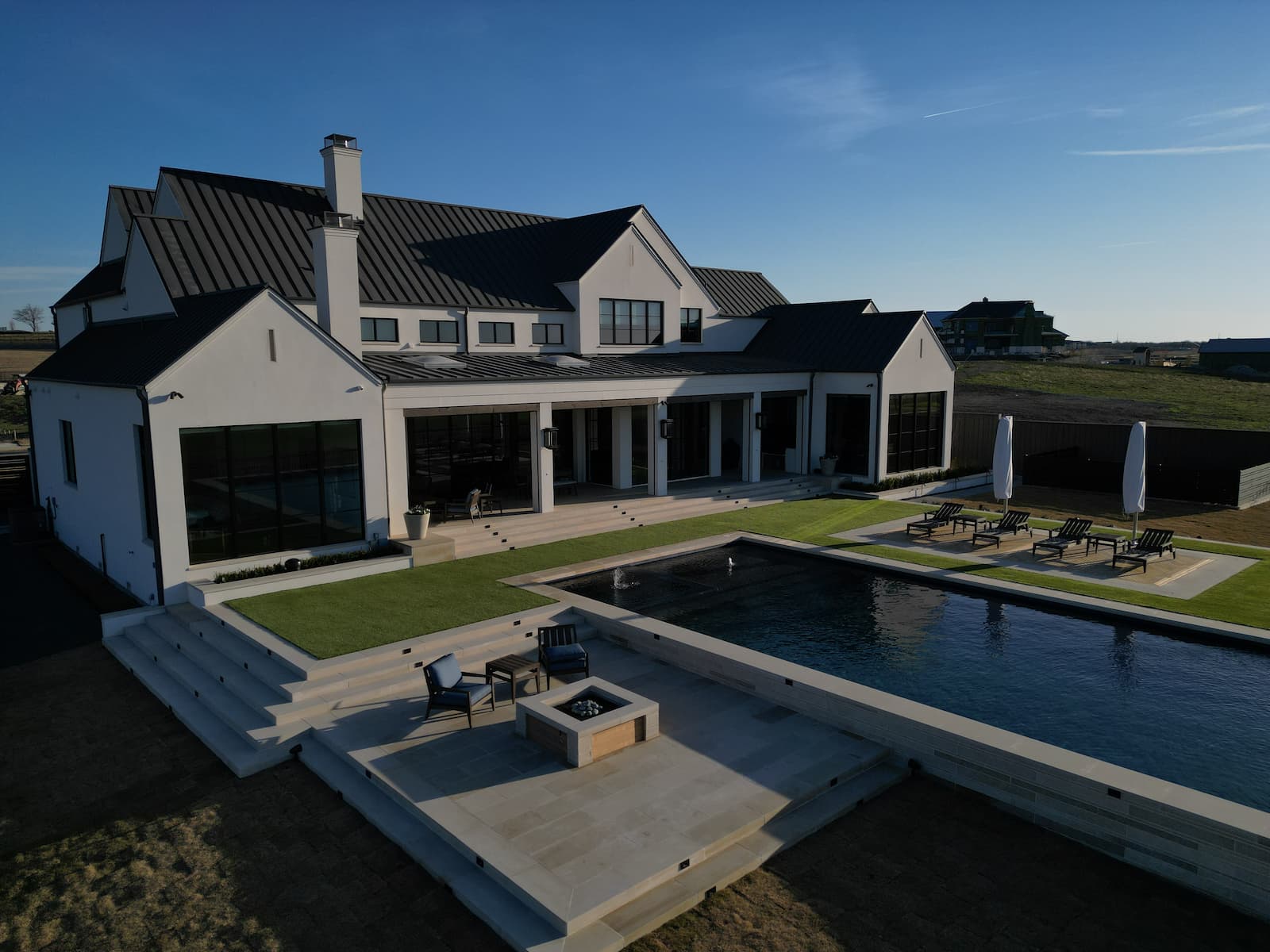
Blount Designs was embedded from day one on the first completed home in The Preserve at Fields, leading every aspect of landscape design and installation surrounding the build — pool, hardscape, planting, lighting, drainage. That partnership pattern, documented on our The Preserve – Frisco project page in collaboration with Alford Homes, is the same pattern we run on subsequent Preserve projects with builder partners committed to embedding the landscape designer at schematic design rather than at finish-out. This is a designer-side view of how the integration actually works on a Preserve build, written for the builder and architect audience. Our community and new development outdoor design engagement is structured around exactly this kind of multi-build, single-community partnership.
Schedule a coordination call if you have a Preserve build in design or in pre-design — or if you want to scope a preferred-vendor partnership for multiple Preserve projects under the same builder team.
What Defines a Preserve Landscape Brief?
Three structural variables shape every Preserve landscape brief. First, the community-coordinated infrastructure. The Preserve at Fields operates from a preliminary grading master plan that establishes the lot-by-lot grading framework before any individual home is designed. That master plan governs how stormwater moves across the broader community, where retaining walls are required, and how each lot's grading overlays into the next. A landscape designer working in The Preserve has to read the master plan as the starting condition — the lot doesn't get redesigned in isolation, it gets resolved against the community framework. Our grading and retaining walls documentation is produced as an overlay against that master plan, not as a clean-sheet design.
Second, architectural inheritance. The Preserve's residential character leans transitional and modern farmhouse — clean masonry envelopes, gabled roofs, generous fenestration, and a high standard of exterior detail. The landscape brief has to translate that architectural language into the exterior environment without breaking the read: structured foundation plantings that frame the elevation, a planting program that carries through from motor court to rear lawn, and an outdoor program (pool, hardscape, fire features, lighting) that integrates inside the architectural frame rather than competing with it.
Third, the community design review path. The Preserve maintains a documented design guideline (most recently updated in mid-2025) that governs material selection, planting palette, hardscape detail, and the submission package. A landscape designer working in The Preserve has to bring documentation discipline to the package — not a sketch and a swatch, but a scaled drawing set produced to the standard the reviewing body expects. The community also issues retaining wall maintenance standards and utility-locating documentation that any new build must coordinate with.
How Does the Landscape Coordinate with the Builder and Architect?
Landscape coordination on a Preserve build runs across at least five trade interfaces, and the cleanest projects treat each of them as a documented handoff rather than a verbal sync. The architect's foundation drawings and slab placement determine the elevation the landscape inherits — every grade transition, terrace step, and motor court datum is set against that elevation, which itself sits inside the community preliminary grading master plan. Bringing the landscape designer in at schematic design means the foundation, grading, and landscape envelope are all coordinated before the slab is poured. On Preserve lots, where community-level grading constrains site-specific moves, the early coordination is the difference between a clean submission and a delayed one.
Hardscape coordinates with the pool contractor's deck and coping. Planting coordinates with the irrigation contractor's zones. Grading and drainage coordinates with the civil engineer against the community master plan. Lighting coordinates with the electrical scope. Our land design engagement carries all of this as a coordinated package, our hardscape design documentation meets the standard the pool and masonry trades expect, and our water and fire features integration coordinates the pool spec inside the broader hardscape and planting frame.
The output is a four-sheet schematic design package — site plan, planting plan, grading and drainage, renderings — followed by design development drawings, full construction documents, and the design review submission package. Builders working with us on Preserve projects regularly receive that package on a documented turnaround so the build schedule never waits on landscape documentation.
What Does the ARB Submission Path Look Like in The Preserve?
The Preserve's design review path expects a complete, scaled landscape package as part of the broader exterior submission, not a planting list with photographs. A defensible submission carries the site plan with full setbacks and easements, the planting plan with a full plant schedule keyed to species and container size, the grading and drainage plan overlaid on the community preliminary grading master plan, the hardscape detail with material schedule, and the lighting plan with fixture placement. Where retaining walls are required, the submission must coordinate with the community's retaining wall maintenance standards. The reviewer's job is to verify that the proposed exterior reads as part of the community standard. Our job is to make that verification straightforward.
One distinction worth flagging early in any Texas conversation: a landscape designer is not a landscape architect. The titles describe different professional credentials, and The Preserve's submission path does not require a licensed landscape architect's stamp on residential exterior work. We address that distinction in detail in our piece on landscape architect vs. landscape designer in Dallas; for the purposes of a Preserve build, the operative point is that the documentation discipline matters more than the title behind it. The package that wins design review approval is the one that is scaled, coordinated, internally consistent, and submitted in the format the reviewer expects.
What Design Language Does The Preserve Reward?
The Preserve design language rewards layered planting, integrated outdoor program, and architectural restraint. On the modern farmhouse and transitional builds that define the community, the strongest landscapes work in three vertical layers. The canopy layer establishes the architectural frame — typically anchored on substantial canopy trees positioned to frame the elevation and to provide shade across the rear program over time. The mid-height layer carries structured foundation planting and seasonal layers that change through the year. The base layer carries textural movement — ornamental grasses, ground cover, sculptural accent moments at sightline positions.
The integrated outdoor program — pool, hardscape terrace, fire features, outdoor game court where applicable — sits inside this planting frame rather than dominating it. Our existing The Preserve – Frisco project page shows how the integration plays out on the first completed home in the community: pool, hardscape, planting, lighting, and drainage all coordinated as one move from earliest site assessments through final walkthrough. That comprehensive scope — landscape, not landscape-as-finishing-trade — is what The Preserve calibrates to. The community pushes back on undisciplined planting density, oversized hardscape, and palettes that read as builder-grade. The brief asks for less, executed better.
What Should Custom Builders Expect from the Coordination Process?
A builder partnering with us on a Preserve project should expect five concrete deliverables across the engagement. A four-sheet schematic design package within a documented turnaround from the design kickoff (site plan, planting plan, grading and drainage, renderings). Design development drawings that resolve material schedules, hardscape detail, and final planting palette. Construction documents the trades can build from without retrofit interpretation. The community design review submission package produced in parallel, coordinated against the preliminary grading master plan and retaining wall standards. And construction-phase coordination — pre-pour walks, hardscape installation meetings, and a final landscape walkthrough at handoff.
The partnership posture matters as much as the deliverable schedule. Builders working with us across multiple Preserve projects typically value the coordination consistency more than the per-project economics: the same point of contact, the same drawing standards, the same submittal format, the same trade-handoff documentation, and the same posture of being embedded from day one rather than brought in at finish-out. That consistency is what compounds across a builder's portfolio at The Preserve. The same is true for architects working the Frisco corridor — the design-development conversation runs cleaner when the landscape designer is a known quantity from the start. The Preserve is one of the most design-forward enclaves in our broader landscape design work across Frisco.
Frequently Asked Questions About Preserve Landscape Design
What kind of landscape brief does The Preserve at Fields require?
The Preserve is a master-planned Frisco community next to PGA Frisco's championship golf courses, with community design guidelines, a preliminary grading master plan every build inherits, and community-level retaining wall standards. The brief is set by that grading framework, the transitional and modern farmhouse architecture, and a design review path that expects a complete, scaled landscape package — so the designer starts from the community infrastructure, not the lot alone.
What does the landscape coordination scope look like on a Preserve build?
The site plan coordinates with the architect's foundation drawings, hardscape with the pool contractor's deck and coping, planting with the irrigation zones, grading and drainage with the community master plan and civil engineer, and lighting with the electrical scope. Pool, hardscape, planting, lighting, and drainage move together from schematic design through construction documents and design review submission — the same embedded-from-day-one pattern Blount ran on the first completed home in the community.
What does The Preserve design review submission package include?
Scaled drawings to the community guideline standard: site plan, planting plan with full plant schedule, grading and drainage overlaid on the community master plan, hardscape detail with material schedule, lighting layout, and retaining wall specs coordinated with community standards. The submission is treated as a deliverable from the start — packages that arrive under-prepared get delayed, so the cleaner discipline is to scope the submission alongside the design brief.
Can the landscape designer act as a preferred-vendor partner across multiple Preserve builds?
Yes. Blount Designs holds multiple project relationships inside The Preserve at Fields, including the publicly credited Alford Homes partnership on the first completed home. We work with select custom builders and architects on a partner basis — consistent scope, predictable turnaround on schematic design and submission packages, joint coordination calls, and collaborative case-study marketing once projects complete. Reach out to scope a preferred-vendor partnership for your Preserve builds.
Schedule a coordination call to discuss a Preserve build in design or in pre-design — or to scope a preferred-vendor partnership across multiple custom builds at The Preserve at Fields. We will walk through the architect's site plan, the community grading master plan starting point, the design review submission path, and the coordination posture before any sketching begins.
Related


