
Design
Outdoor Kitchen Design Trends for Luxury Outdoor Living
-
Blount Designs

Outdoor kitchen design has moved a long way from the freestanding grill island. The strongest trends right now treat the outdoor kitchen as a designed room — one composed alongside the dining, lounging, and water elements around it rather than dropped onto the patio as an accessory. For homeowners planning a luxury outdoor space, understanding where outdoor kitchen design is heading makes it easier to invest in choices that will still read well years from now. These are the trends shaping how the best outdoor kitchens are being designed, and how to think about each one for your own property.
If you want to see how these ideas come together on a real project, our outdoor living and recreation work is the place to start.
What Are the Biggest Outdoor Kitchen Design Trends Right Now?
The throughline across every trend below is integration. The outdoor kitchen is no longer a single-purpose station — it is the working heart of an outdoor living space, and design decisions are increasingly made in relationship to everything around it. That shift shows up in layout, materials, structure, and the way the kitchen connects to fire, water, and lighting.
1. Integrated Kitchens, Not Bolt-On Islands
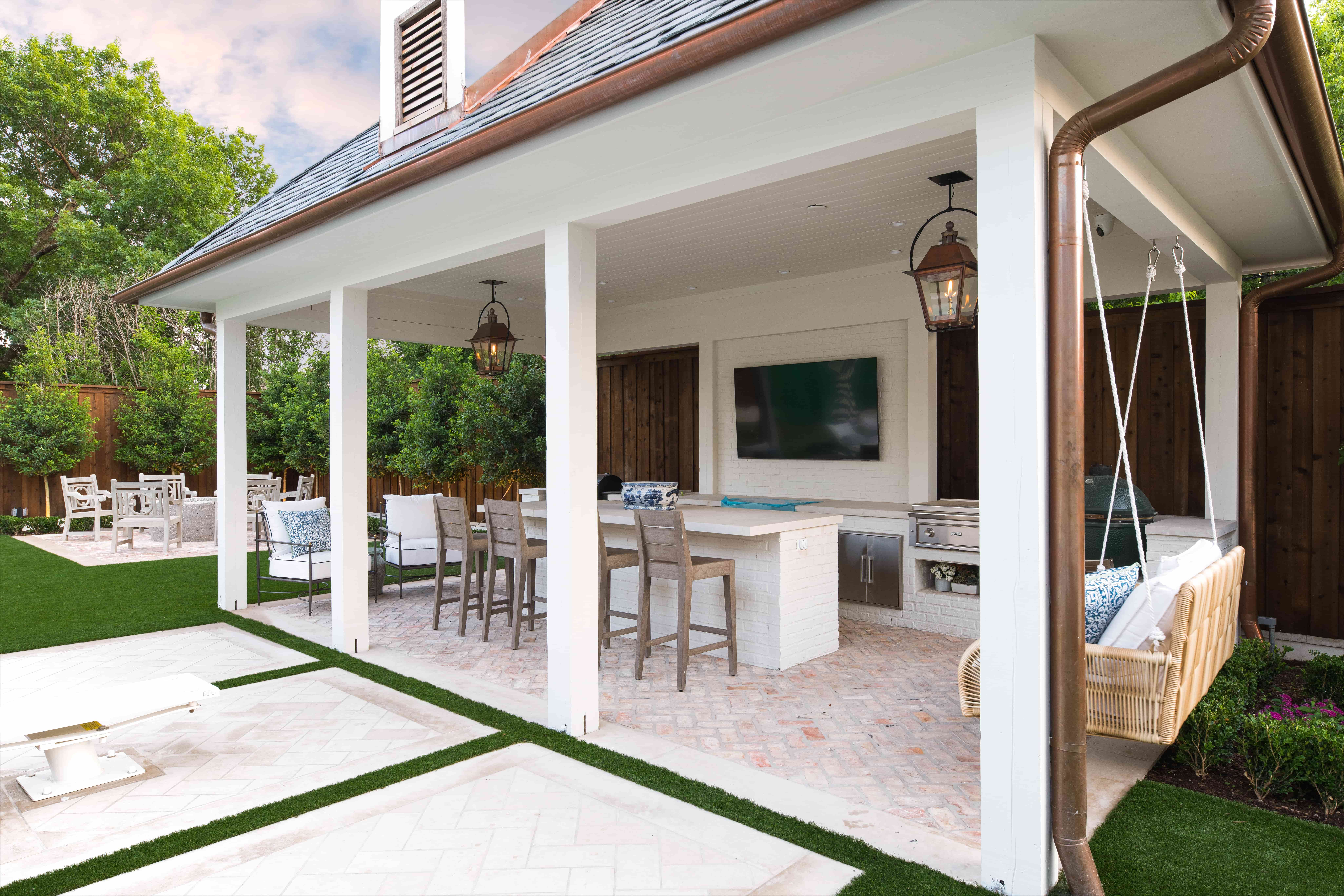
The clearest move in outdoor kitchen design is away from the standalone island and toward a kitchen drawn into a larger plan. Instead of one bar set apart from the living areas, the cooking zone, dining, and lounge are composed together with shared materials and clear circulation. The payoff is in daily use: prep space where you need it, cooking that does not crowd the people gathered nearby, and a kitchen that reads as part of the hardscape design rather than an afterthought sitting on top of it.
2. All-Season Covered Structures
Covered outdoor kitchens are among the fastest-growing trends because they extend how much of the year a space is genuinely usable and shelter appliances and surfaces from sun and weather. A roof or substantial pergola also unlocks design moves an open kitchen cannot support well — overhead lighting, proper ventilation for a built-in grill, ceiling fans, and heaters that push the season longer in both directions. The structure has to be planned early, since it shapes everything from drainage to where utilities run. The same thinking drives year-round outdoor living spaces.
3. Material Trends: Sintered Stone, Cast Concrete, and Stainless
On surfaces, sintered stone and porcelain slabs are the strongest current trend — large-format, low-maintenance, and highly resistant to heat, UV fading, and staining. Cast concrete continues to gain ground in modern and transitional designs because it can be formed to custom shapes and is naturally heat-tolerant, while granite remains a durable classic that holds its color outdoors. For appliances and cabinetry, premium-grade 304 stainless steel is still the standard for resisting corrosion. The consistent thread is specifying materials built for full weather exposure rather than indoor products moved outside.
4. Fire and Water as Part of the Kitchen
Designers are increasingly composing the kitchen alongside fire and water rather than treating them as separate features. A kitchen that opens onto a fire table or a spill-over water feature gains heat, movement, and sound that make the space work into the evening and across more of the year. When those elements are drawn from the same water and fire features program as the kitchen, the materials and proportions stay consistent — which is exactly what separates a designed space from an assembled one. Our guide to custom water features goes deeper on that integration.
5. Zoned Entertaining and the Social Kitchen
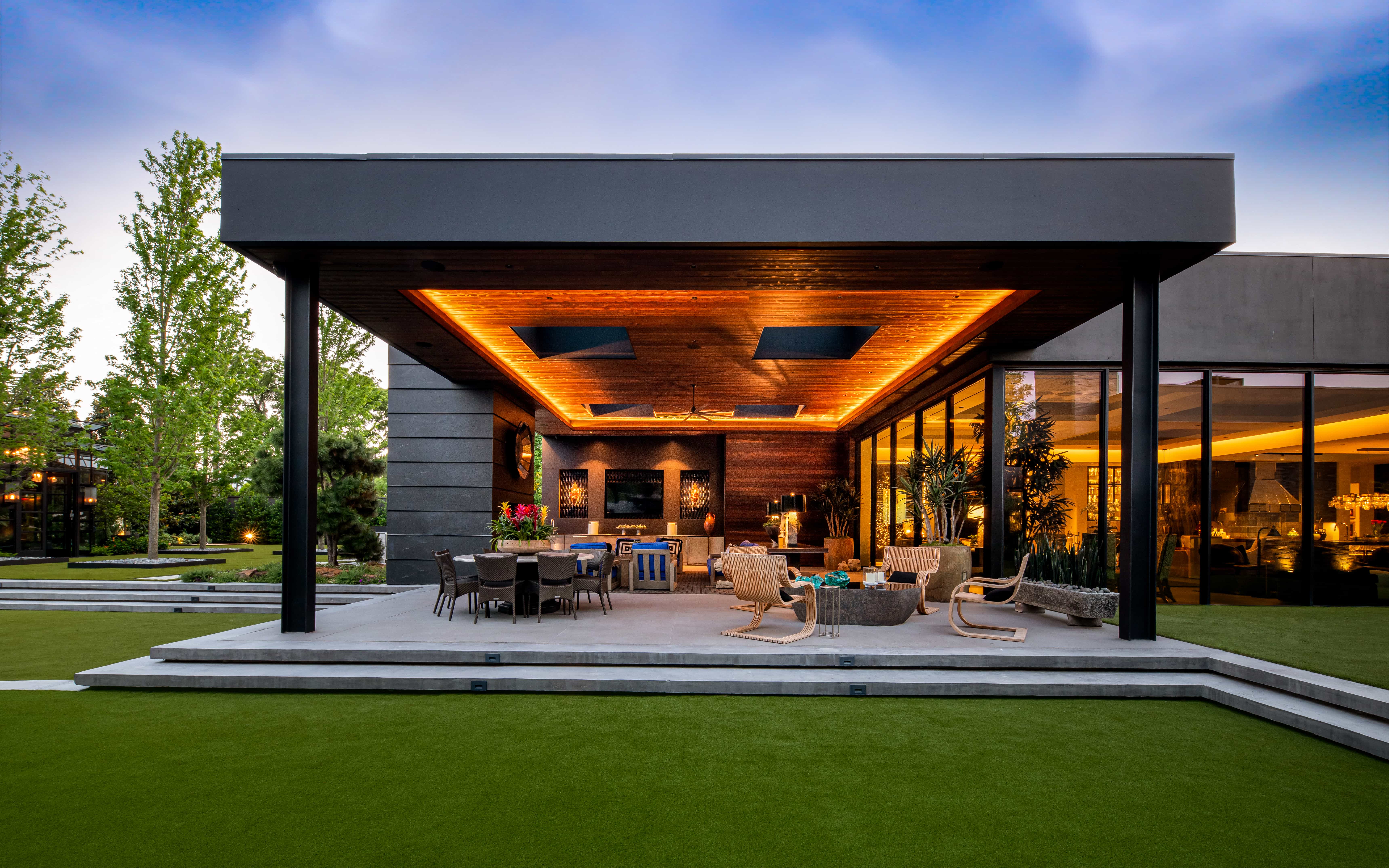
The outdoor kitchen is being designed as a social hub, with distinct zones for cooking, casual seating at a bar, and a separate dining or lounge area. This zoning lets a host work without being cut off from guests and lets larger gatherings spread out naturally. Pairing the kitchen with an adjacent pool and spa area is one of the most common expressions of this trend, where the cooking and gathering spaces are designed in concert with the water rather than competing with it.
6. Statement Ventilation, Appliances, and Lighting
As kitchens move under cover, ventilation, appliances, and lighting are becoming design features in their own right rather than utilitarian add-ons. A well-detailed hood, a considered lighting layer for both task and ambience, and appliances chosen to match how the household actually entertains all contribute to a kitchen that feels finished. The trend is toward fewer, better-specified elements rather than a long checklist of appliances that go unused.
7. Designed Sightlines and Indoor-Outdoor Flow
A quieter but increasingly important trend is positioning the kitchen for sightlines and flow rather than convenience alone. Designers are siting the cooking and gathering zones so they connect visually to the home's interior and to the primary views of the property — a pool, a garden, a stand of mature trees. Matching the thresholds, flooring transitions, and material proportions between inside and out makes the outdoor kitchen read as a true extension of the home's living space rather than a separate destination at the back of the yard. This is where designing the kitchen alongside the broader landscape, instead of in isolation, makes the largest difference to how the finished space feels.
How Do These Trends Hold Up in a Climate Like North Texas?
Trends are only worth following if they survive the conditions where the kitchen is built. In a climate like North Texas — sustained summer heat, intense UV, and the occasional hard freeze — the material trends above earn their popularity precisely because they tolerate exposure. Sintered stone and porcelain resist fading, cast concrete handles heat, and quality stainless resists corrosion through humidity. Covered structures matter even more here, since shade and shelter materially extend the usable season. None of this requires chasing a trend for its own sake; it means choosing the trending ideas that also happen to perform locally.
How Do You Choose Trends That Won't Date Your Outdoor Kitchen?
The most useful way to use a trend list is as a set of ideas to test against your own property, not a checklist to copy. The kitchens that age well are anchored in the architecture and material palette of the home, with durable, neutral core surfaces and styling that lives in the elements that are easy to change. That is also where working through the design with a landscape designer pays off — the conversation separates the trends with staying power from the ones that will look dated in a few seasons. Our North Texas outdoor living investment guide and our outdoor living project in Fort Worth both show how these decisions play out when a kitchen is designed as part of a complete outdoor plan.
Frequently Asked Questions About Outdoor Kitchen Design Trends
What is the most popular outdoor kitchen layout right now?
The clearest trend is away from the standalone island and toward a kitchen integrated into a larger outdoor living plan. Rather than a single bar parked on the patio, the cooking zone, dining, and lounge are designed as one composition with shared materials and circulation. The layout is drawn around how the household entertains, so prep, cooking, and gathering each have their own space and do not collide when more than one person is using the kitchen.
What countertop materials are trending for outdoor kitchens?
Sintered stone and porcelain slabs are the strongest current trend because they offer large-format, low-maintenance surfaces that resist heat, UV fading, and staining. Cast concrete is also popular for modern and transitional designs, since it can be formed to custom shapes and is naturally heat-tolerant. Granite remains a durable classic and holds its color outdoors. Across all of them, the consistent move is choosing surfaces specified for full weather exposure rather than indoor materials used outside.
Are covered outdoor kitchens worth it?
Covered structures are one of the fastest-growing outdoor kitchen trends because they extend how much of the year the space gets used and protect appliances and surfaces from sun and weather. A roof or pergola also unlocks design moves that an open kitchen cannot support well, such as overhead lighting, ventilation for a built-in grill, and ceiling fans or heaters. The trade-off is that a covered kitchen has to be planned early, since it shapes the structure, drainage, and utility routing around it.
How do I keep my outdoor kitchen design from looking dated?
Anchor the design in the architecture and material palette of the home rather than in a single trend. Trends are best used as ideas to evaluate against your own property, not as a checklist to copy. Choosing durable, neutral core surfaces and letting color and styling live in the elements that are easy to change keeps a kitchen current. Working through the design with a landscape designer helps separate the trends with staying power from the ones that will read as dated in a few seasons.
If you are weighing these trends for your own property, the next step is a conversation about how you entertain and how a kitchen fits the rest of your outdoor space. Schedule a design consultation and we will help you plan around the ideas worth keeping. Start the conversation here.
Related


