Landscape Site Planning
What Goes Into a Custom Landscape Plan
-
Blount Designs
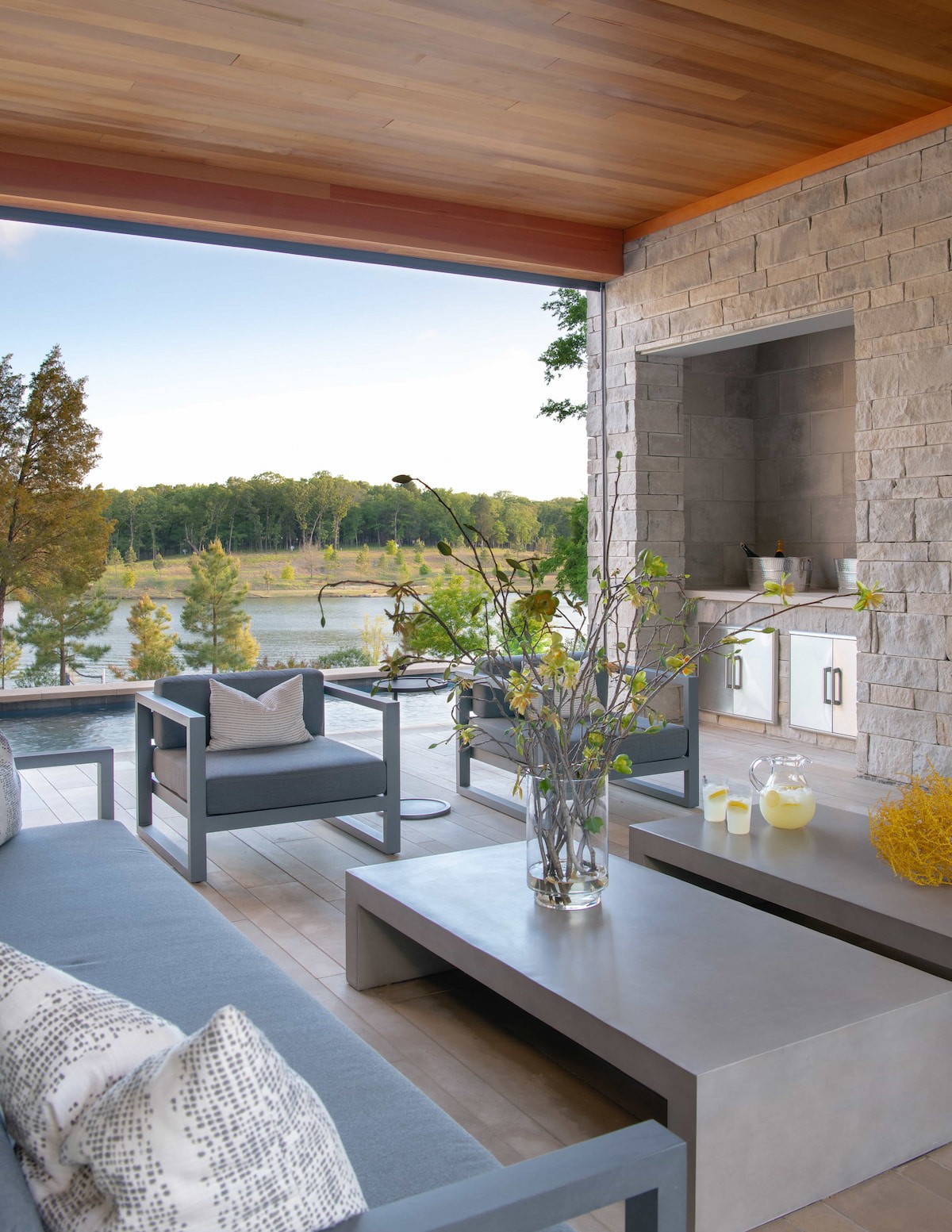
A custom landscape plan is more than a drawing of where plants go. It is a coordinated set of documents that define every outdoor element of a property — hardscape, planting, grading, drainage, pools, water features, lighting, and the materials that tie them together — scaled and specified to the level a builder can price and install. The range of what a "landscape plan" actually contains varies widely, which is why two homeowners asking the same question can be quoted completely different scopes and deliverables.
At Blount Designs, we tell clients early that no two projects are structured the same. Some want direction and conceptual plans with quick renderings to guide a builder. Others need detailed construction documents ready for permitting, pool contractors, and HOA review. Both are valid starting points. The goal of this guide is to explain what a complete landscape plan includes, how deliverables scale from concept to construction, and what actually drives the scope of a project.
Schedule a design consultation to scope the right deliverables for your property.
What's Actually in a Custom Landscape Plan?
A full landscape plan is built in layers over a scaled base file. The base file is the starting point — property lines, existing structures, mature trees, utilities, and topography — drawn from a survey. Every layer added after that references the same coordinates, so the pool, the patio, the planting beds, and the drainage swales all line up in real space.
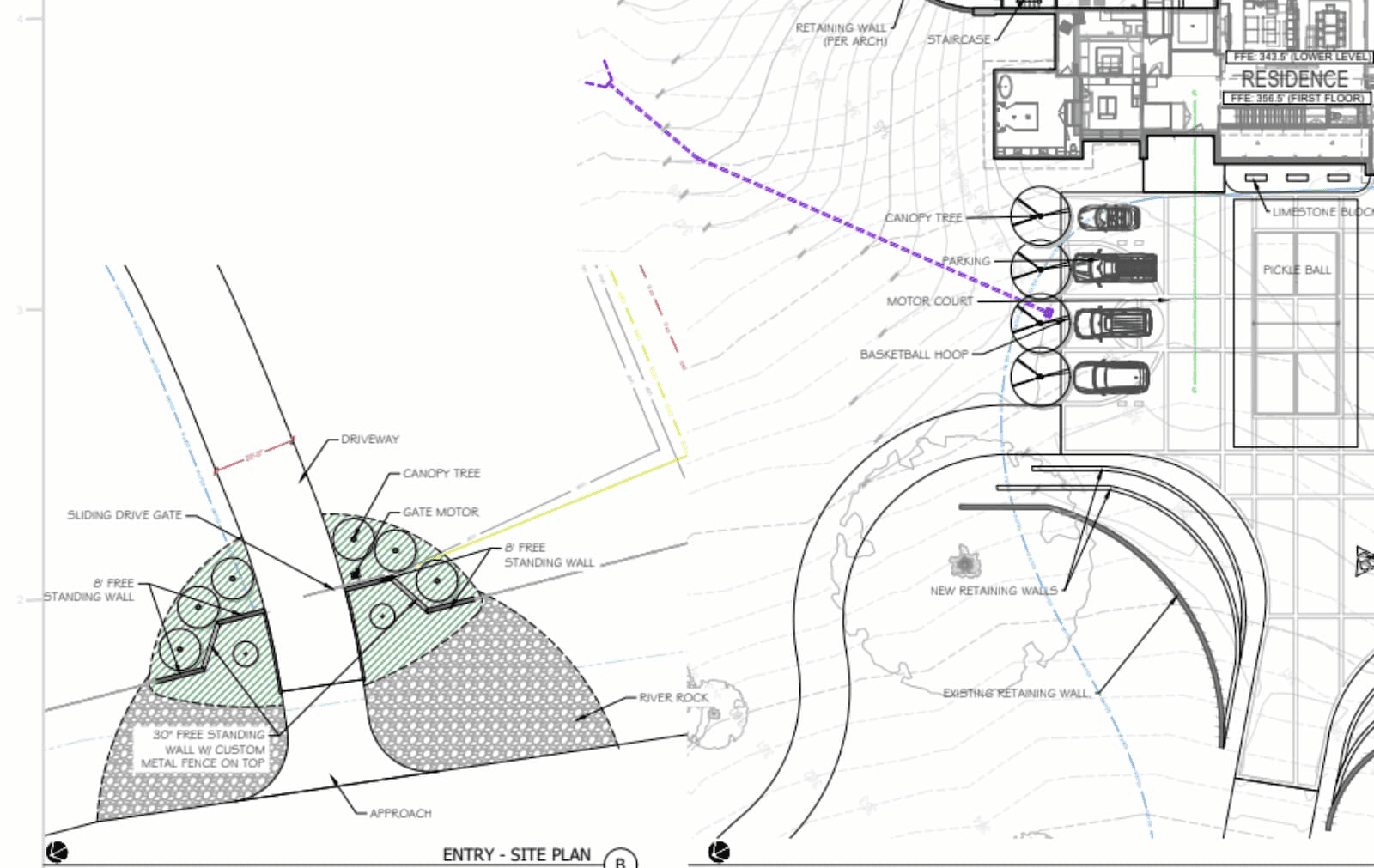
The hardscape layer defines the permanent built elements: patio surfaces, pool shell and coping, outdoor kitchens, cabanas, walkways, driveways, retaining walls, and structural features. The planting layer specifies every plant by species, mature size, placement, and spacing, with material call-outs so the installing crew is not guessing at substitutions. The grading and drainage overlay shows how water moves across the property — where swales and catch basins are needed, how the finished grade meets the existing one, and how runoff is directed away from the house. In North Texas clay soil, this layer is often the most technically demanding part of the plan. Our grading and retaining wall documentation is frequently the first set completed on new construction projects, because the house's finished floor elevation and the surrounding grade have to be coordinated before a foundation is poured.
Lighting is drawn as its own overlay — fixture locations, circuits, transformer placement, and photometric intent. Water features and fire elements carry their own specs, including gas and plumbing service points. Pools and spas, when included, are documented with shell dimensions, coping, decking transitions, equipment locations, and surrounding planting coordination. A complete plan also includes material schedules that list every specified stone, concrete finish, wood, metal, and plant in one referenceable document so the install team, and the client, can verify what was ordered against what was installed. For projects that include multiple of these elements, our land design engagement pulls them all into one coordinated deliverable.
How Do Conceptual Plans Differ From Construction Documents?
A landscape plan is not one deliverable — it is a progression of deliverables, each one more detailed than the last. The clearest way to think about it is as three tiers, each appropriate for different kinds of projects.
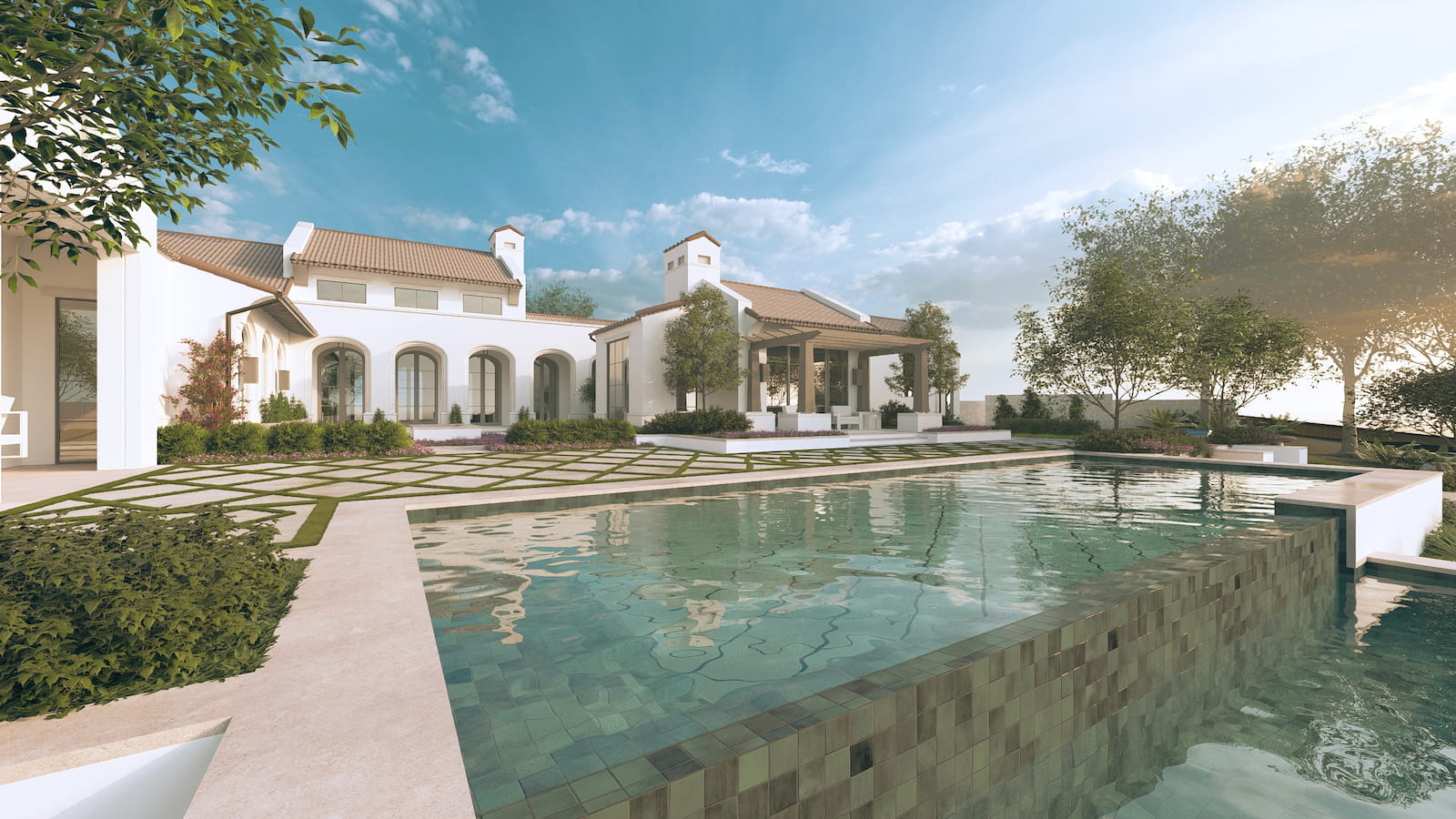
A conceptual plan captures intent. It shows the big moves — where the pool goes, the feel of the material palette, the rough layout of the hardscape, and the general planting direction. Concepts are typically delivered with quick renderings so a client can see the vision before a line of technical documentation is drawn. For projects where the scope is straightforward, or where a builder or installer will handle the detailing, a concept is often all that is needed. For a closer look at how that first stage is produced, our post on what a landscape site plan includes walks through the base file and overlay structure.
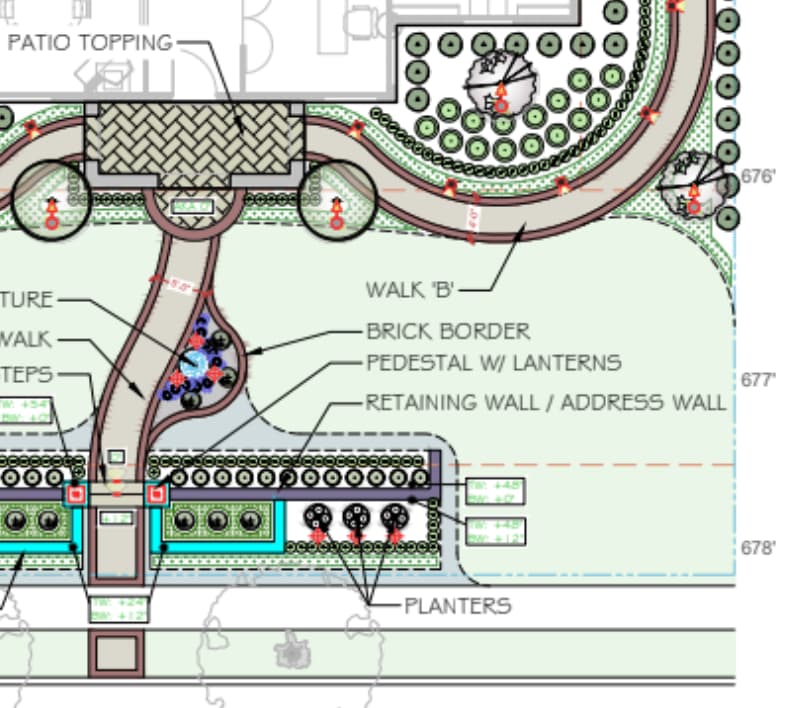
Schematic design is the next step. Once the concept is approved, schematic design produces a scaled, dimensioned version of the plan — accurate to real space, with setbacks, measurements, and a confirmed layout. Schematic design is where we review with the client in detail: likes, dislikes, material direction, and any shifts in scope. That review is intentional. Catching a change at schematic is straightforward. Catching it at construction is expensive.
Construction documents are the buildable set. After schematic review, the project moves into design development, where materials, fixtures, and specifications are locked in. From there the documentation becomes construction-level — drawings detailed enough to be handed to a builder, pool contractor, or HOA review board. CDs carry dimensions, material specs, detail call-outs, grading contours, electrical and plumbing service points, and anything else a trade needs to build without improvising. Our design process moves through each of these stages in order, and we scope the engagement at the first consultation so a client knows exactly what set of documents they are receiving.
What Factors Affect the Scope of a Landscape Plan?
Scope is the real answer to the question most homeowners are actually asking when they ask what a landscape plan costs. The documentation level is only one factor. The others are more about the property itself and the constraints around it.
Lot size and program complexity are the largest drivers. A courtyard redesign on a Preston Hollow estate is a different scope than a full acreage buildout in Aledo with pool, outdoor kitchen, sport court, and cabana. The more coordinated trades involved — pool and spa work, outdoor kitchens, hardscape installation, water and fire features, structural elements — the more documentation is required to coordinate them without conflicts in the field.
Grading and drainage requirements add scope quickly. Flat lots with good soil drain themselves. Lots with elevation change, existing water issues, or new construction FFE coordination require significantly more technical work on the grading layer. The same is true for retaining walls: a decorative knee wall is one conversation; a structural retaining wall holding back a significant grade change is another. North Texas clay soil behavior is baked into every grading decision we document in the region.
HOA and permitting requirements can also extend the scope. Several of the private communities our studio works in — Vaquero and Maverick in the Discovery Developments portfolio, Montrachet, Westlake, Frisco's new build corridors, and Aledo's acreage sections — have architectural review boards that require scaled landscape documentation before work begins. Pool permits, septic considerations, and shoreline regulations on lake properties like Long Cove and Freestone all add layers of documentation that a non-regulated project would not need. The final variable is deliverable level: a homeowner who needs direction and conceptual plans with quick renders is working on a very different document set than one who needs full construction documents ready for permit submission. We structure the engagement either way — both are legitimate starting points.
Frequently Asked Questions About Custom Landscape Plans
What's the difference between a landscape plan and a site plan?
In day-to-day conversation, the two terms are often used interchangeably. In practice, "site plan" usually refers specifically to the scaled, dimensioned drawings — the schematic or construction document set that can be handed to a builder or HOA. "Landscape plan" is the broader term that can describe anything from a conceptual sketch with a planting list up through a full construction document package. When we scope an engagement, we name the specific deliverable — conceptual, schematic, design development, or construction documents — so the client knows exactly what they are receiving.
How much does a custom landscape plan cost?
Fees are project-specific and scoped at the first consultation, because several variables affect them: lot size, scope of work, the mix of trades involved, grading and drainage complexity, HOA or permitting requirements, and the deliverable level the client needs. A concept set with quick renderings for a straightforward property is a different engagement than a full construction document set for an estate with pool, outdoor kitchen, cabana, and coordinated grading. We scope the project honestly at the first meeting and structure the engagement to match — there is no template pricing because there is no template project.
How long does a custom landscape plan take to produce?
Timing depends on the same variables that drive scope. A conceptual engagement for a moderate residential property can move quickly. A full set of construction documents for a coordinated estate — base file, concept, schematic review, design development, and CDs — is a longer timeline, especially when HOA review and builder coordination are part of the critical path. At the consultation we map the deliverables to a realistic schedule so the project timeline is clear from the start.
Can I get a custom landscape plan if my property is outside Texas?
Yes. We produce virtual design plans for clients across the United States. The studio works from surveys, site photography, and video the client provides, and delivers the same base file, concept, schematic, and construction documentation we would produce locally. For permit-stage engineering, local drainage requirements, and on-site coordination, out-of-market projects typically pair our documentation with a local builder or civil engineer on the client's side.
If you are planning a pool, a full property redesign, or a new build and want to understand what a complete landscape plan would include for your property, request a design consultation. Our project portfolio shows custom plans translated into finished work across Preston Hollow, Highland Park, Frisco, Fort Worth, and the lake communities we design for across North Texas.
Related