
Design
Park Cities Landscape Design | Highland Park, Preston Hollow & University Park
-
Blount Designs

Three Park Cities neighborhoods — Highland Park, Preston Hollow, and University Park — share a postcode-level zip in the cultural map of Dallas, but they read as three different design briefs. The mature canopy is different. The lot geometry is different. The architectural inheritance is different. The ARB submission realities are different. And the homeowners commissioning landscape work in each neighborhood arrive with different problems, different reference projects, and different definitions of what a finished property looks like. A landscape designer working across the Park Cities has to read those differences before the first sketch — because the brief that works in one neighborhood will quietly fail in the next.
This is a designer-side view of how the Park Cities brief actually shapes a project — what the canopy demands, how the architectural language of each neighborhood reroutes the planting and hardscape conversation, and where ARB submissions add a documentation layer most homeowners do not anticipate. Blount Designs has worked across all three neighborhoods on residential land design engagements; the read below is drawn from that work.
What Defines the Park Cities Design Context?
The Park Cities sit on a band of mature urban canopy that is rare anywhere in North Texas — post oak, live oak, pecan, and a layer of red oak and magnolia threaded through residential lots established in the early-to-mid twentieth century. That canopy is the most consequential single variable in any Park Cities landscape brief. Seventy-to-one-hundred-plus-year-old trees shape every downstream decision: where hardscape can be cut without damaging root flares, where planting can be massed without competing for light, where lighting can be placed without overdriving the canopy at night.
Architectural inheritance is the second variable. Highland Park leans Tudor, Georgian, and traditional brick estate. Preston Hollow holds a wider mix — formal classical, midcentury ranch, contemporary glass, and large-program estates on multi-acre lots. University Park sits between the two — transitional, often newer-build, with a higher proportion of family-program properties on tighter lots. A Highland Park Tudor wants formal hedge geometry, slate or limestone hardscape, and traditional shrub-and-perennial massing. A Preston Hollow contemporary wants concrete or basalt hardscape, ornamental grass and Mediterranean planting, and lighting that sculpts the architecture. A University Park transitional splits the difference and resolves family programming alongside curb-appeal restraint.
The third variable is ARB review. Highland Park's tree preservation ordinance is among the most protective in the metro. University Park's review framework is procedurally lighter but visually conservative. Preston Hollow's enclaves vary — many sub-neighborhoods carry deed restrictions or HOA standards committees that require scaled documentation for any meaningful exterior change. A Park Cities-fluent designer treats the submission package as a deliverable, not an afterthought.
How Do Highland Park, Preston Hollow, and University Park Differ as Design Briefs?
The clean way to read the differences is by what each neighborhood pulls forward as the dominant constraint. Highland Park pulls the tree canopy and architectural tradition forward. Preston Hollow pulls lot scale and program range forward. University Park pulls family program and tight-lot geometry forward. Three different leads, three different briefs.
On a Highland Park landscape design engagement, the brief starts with the canopy.
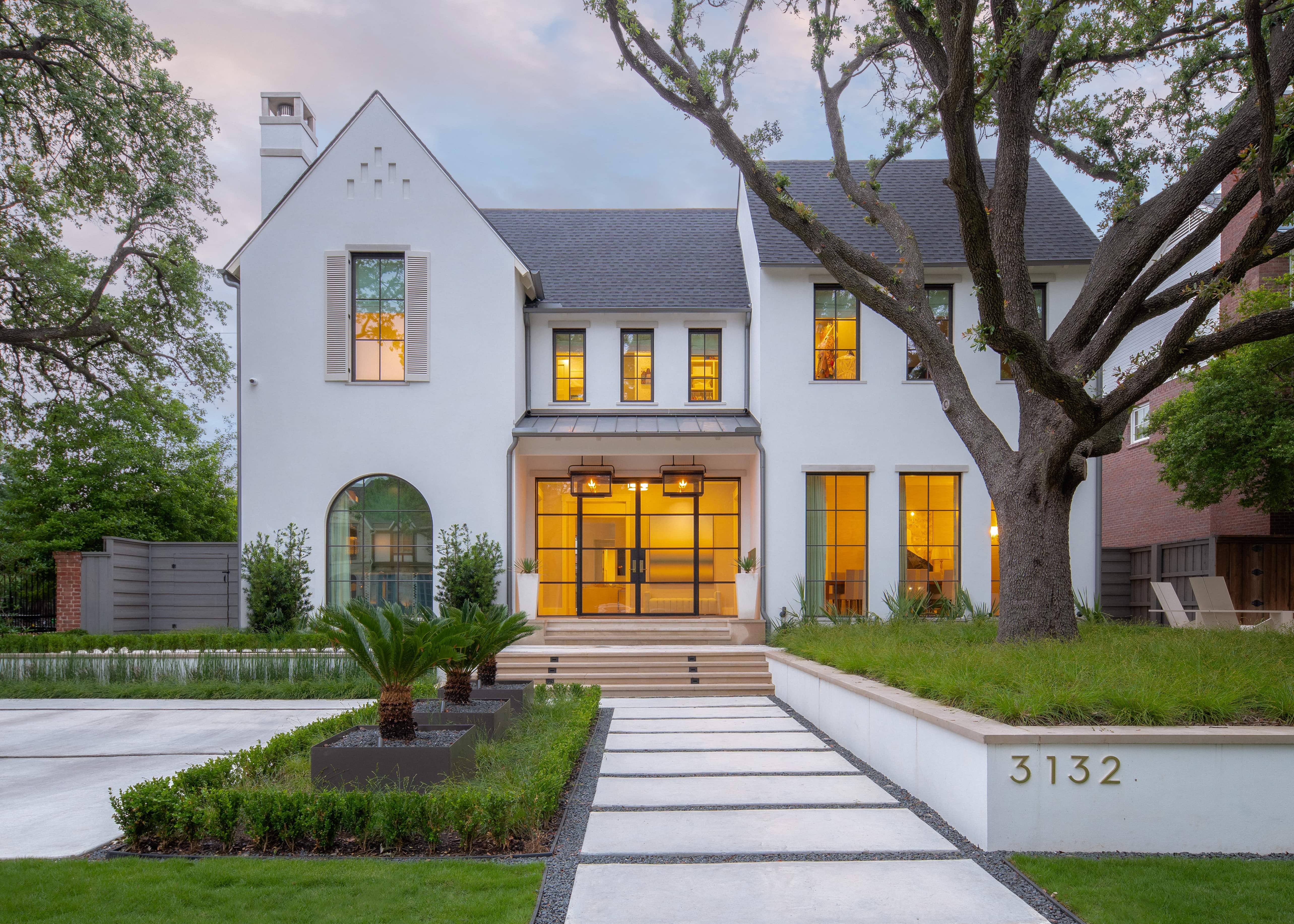
A property with a hundred-year-old live oak in the front yard is not getting a clean-sheet redesign — it is getting a design that works around the canopy as a non-negotiable. Hardscape is the second layer: lead walk, motor court, and entry paving in a stone or brick palette that echoes the home's primary masonry. Planting comes third, with formal massing under the canopy and seasonal layers calibrated to partly shaded conditions. Our Refined Highland Park Retreat is a useful reference for this sequence.
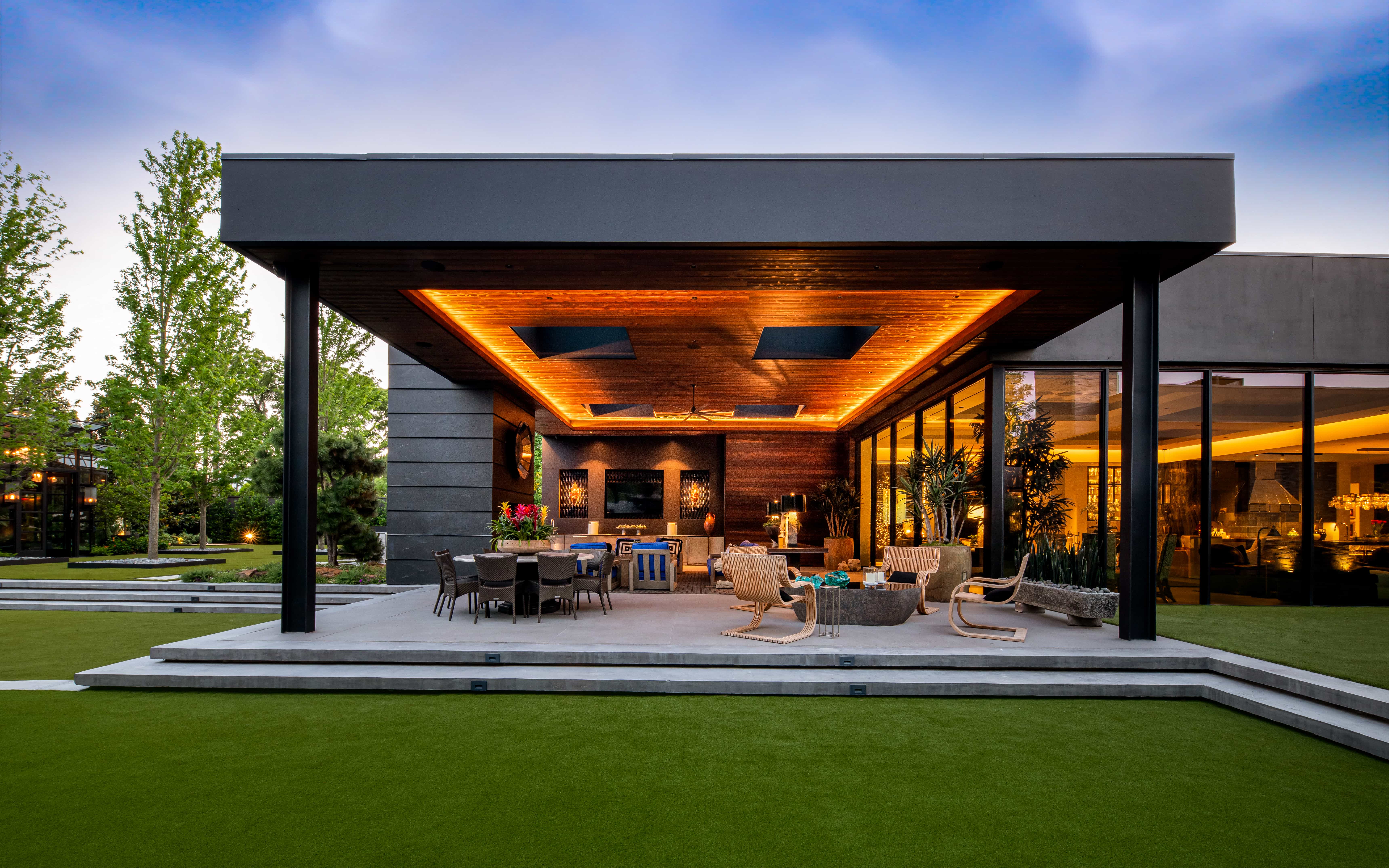
On a Preston Hollow landscape design engagement, the brief expands. Lots are typically larger, frequently include a back-of-house program (pool, outdoor kitchen, outdoor court, cabana) on top of the front-of-house brief, and often involve a documented standards-committee review. The design problem is no longer a single elevation — it is a property-wide narrative. Motor court, side garden, pool terrace, rear lawn, and entertaining program each have to read as part of the same property without flattening into uniformity.
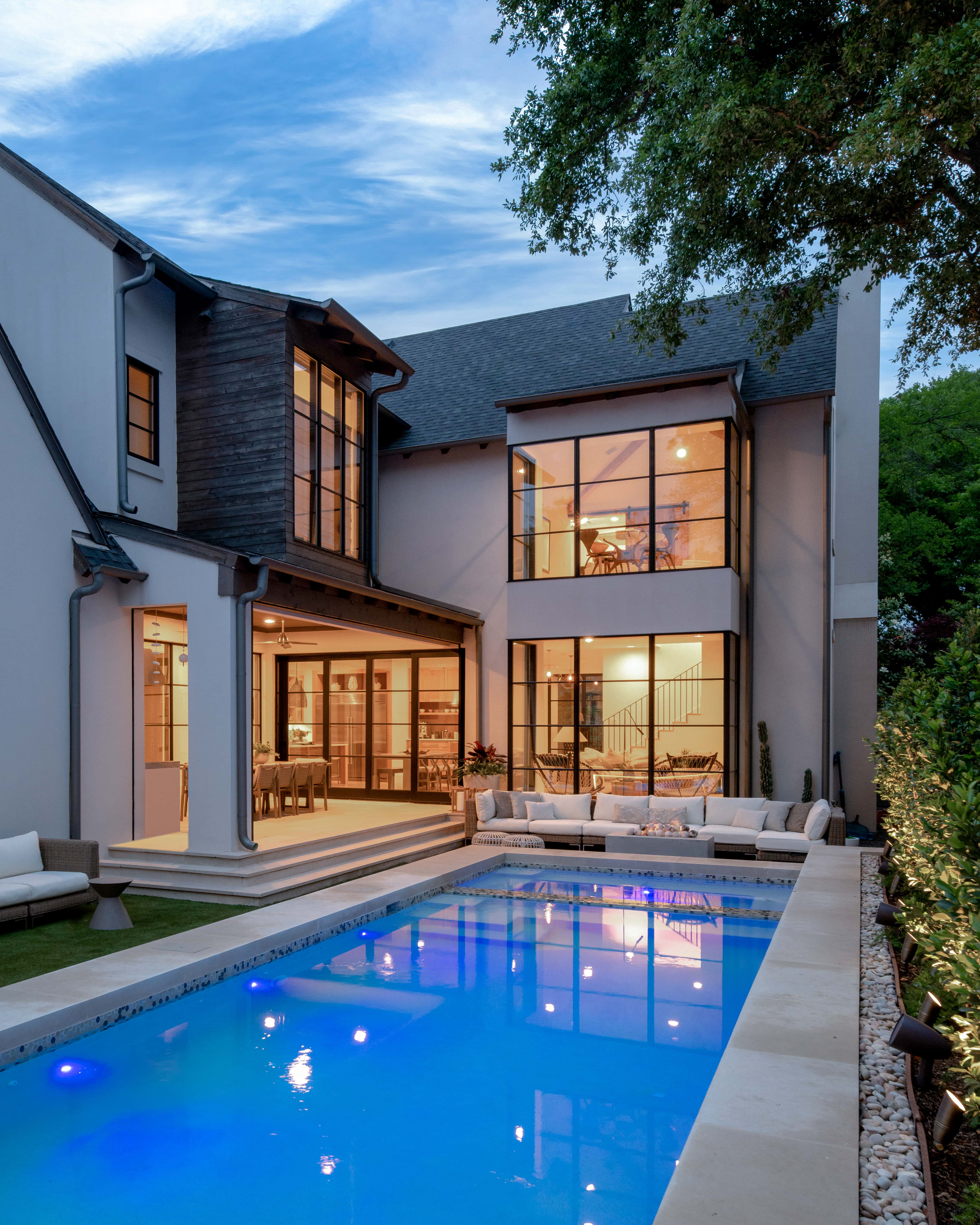
On a University Park property, the brief tightens. Lots are smaller, often newer-build, and the homeowner is usually working a transitional architectural read with a heavy family-program component. Tight lot geometry forces every square foot to do work — no wasted run between the side gate and the rear lawn, no underused side yard. Family programming — pool fencing compliance, backyard game court geometry, mud-room garden access — becomes a primary brief input. Our University Park Modern outdoor design engagement worked all three constraints on a single property.
What Should a Park Cities Landscape Designer Bring to the Table?
The Park Cities brief rewards a designer who arrives with three things: neighborhood literacy, documentation discipline, and a coordination posture. Neighborhood literacy is the read described above — knowing without asking that a Highland Park brief leads with the canopy, a Preston Hollow brief leads with program scale, a University Park brief leads with tight-lot family programming. A designer without that read defaults to a standard residential approach that misses the actual problem. The portfolio should show work in the specific neighborhood, not just the metro.
Documentation discipline matters because Park Cities work moves through more review than work in newer corridors. ARB submissions, tree preservation documentation, drainage and grading studies on tighter lots, HOA standards-committee packages — each needs a scaled drawing set produced to the standards of the reviewing body. The licensing distinction matters here — there is a real difference between a landscape architect (a state-protected title in Texas) and a landscape designer, and the question of which one a Park Cities project actually needs is more nuanced than most homeowners assume. Our piece on landscape architect vs. landscape designer in Dallas walks through that distinction.
Coordination posture is the third. A Park Cities project frequently runs alongside a builder, interior designer, pool contractor, and architect. The landscape brief has to integrate with all of them — site plan coordinated with the architect's foundation drawings, hardscape with the pool contractor's deck and coping, planting with the irrigation contractor's zones, lighting with the electrical scope. A designer who hands off a planting drawing and disappears from the construction phase introduces friction at every coordination point. The discipline that produces a clean geometric landscape design in the Park Cities is the same discipline that holds the project together across trades.
What Drives Scope on a Park Cities Landscape Plan?
Scope is shaped by a small set of variables that recur across nearly every Park Cities project. Lot size — a Preston Hollow estate on 1.5 acres has a different program ceiling than a University Park property on a quarter-acre. Existing canopy — every mature tree adds preservation documentation and reduces permanent hardscape in its drip line. Architectural read — a Tudor wants different geometry and a different material schedule than a contemporary glass home. ARB or standards-committee requirements — submission packages add a documentation layer that varies in depth by neighborhood and community.
Four programmatic elements drive most of the visible scope. The motor court and lead walk geometry sets the formality of the property and is the first read for any visitor. The planting program — foundation layer, mid-height massing, specimen trees, seasonal layers — defines the soft frame of the architecture and how the property changes through the year. The hardscape program — entry paving, side terraces, rear deck, pool coping where applicable, retaining walls where lot grade requires — defines the permanent built envelope. And the lighting program, under-invested in on most properties, is the single most effective upgrade to a daytime-functional plan. A coordinated landscape and gardens engagement carries all four through documentation in one package.
One scope decision worth flagging early is whether the engagement covers the full property or starts with the front-of-house only. A front-of-house engagement is a defensible scoping move when the rear program already works — see our front house landscape plan approach. A full-property engagement is the default on Preston Hollow estates where the program is larger and the design has to read as one move.
What Are the Common Pitfalls When Designing for Park Cities Properties?
The most common pitfall is treating the Park Cities as a single homogeneous market. Every paragraph above pushes against that assumption — Highland Park, Preston Hollow, and University Park share a brand identity but read as three different design problems. A designer who carries one brief into all three neighborhoods produces work that fits none of them well.
The second pitfall is under-scoping documentation. ARB / standards-committee review on Park Cities work requires scaled drawings to a documented standard, not a sketch and a swatch. Properties that arrive at submission with under-prepared packages typically end up delayed while the documentation gets reworked. The cleaner discipline is to scope the documentation deliverable from the first sketch.
The third pitfall is fighting the canopy. A mature live oak or pecan in the front yard is not a problem to be designed around — it is an asset whose presence determines the architectural read of the property. Designers who treat existing trees as obstacles rather than as anchors produce plans that look correct on paper and fail on the property. The right move is to start the design from the canopy outward and treat the rest of the program as a response to that anchor. Our Preston Hollow Zen Retreat is an example of a project where the canopy did most of the architectural work.
Frequently Asked Questions About Park Cities Landscape Design
Do Highland Park, Preston Hollow, and University Park have different landscape requirements?
Yes. The three share a Park Cities brand identity but read as three different design briefs. Highland Park leads with mature canopy preservation and traditional architectural inheritance. Preston Hollow leads with larger lot scale and broader programming. University Park leads with tighter lot geometry and family-focused programming. A designer working across all three should bring a different scoping conversation to each, not the same template.
Does a Park Cities landscape design require an ARB or HOA submission?
It often does. Highland Park's tree preservation ordinance shapes nearly any meaningful exterior change. Many Preston Hollow sub-neighborhoods carry deed restrictions or standards-committee review that require scaled documentation. University Park's review framework is lighter but the visual standard is conservative and the documentation expectation is real. Confirm the review path at the start of the engagement and scope the documentation deliverable accordingly — submission packages built into the timeline, not added at the end.
How long does a Park Cities landscape design engagement take?
Timeline varies by scope, lot scale, and review path. A front-of-house engagement on a smaller property typically moves faster than a full-property engagement on a Preston Hollow estate, and projects requiring ARB or standards-committee submission carry an additional review window. The cleaner question is what the deliverable schedule looks like — schematic design, design development, construction documents, submission package, and construction-phase coordination — rather than a single calendar number.
What separates a Park Cities-fluent landscape designer from a general residential designer?
Three things. Neighborhood literacy — a portfolio showing work in Highland Park, Preston Hollow, and University Park specifically, not just the broader metro. Documentation discipline — a coordinated drawing set across hardscape, planting, grading, lighting, and material schedule produced to the standard the reviewing body requires. Coordination posture — a designer who stays engaged through construction documentation and the construction phase rather than handing off a planting list at schematic design.
Schedule a design consultation to discuss a landscape design engagement on a Highland Park, Preston Hollow, or University Park property — we will walk through the canopy, architectural read, and review path on your specific site before any sketching begins.
Related


