
Landscape Rebuild
Front House Landscape Plans: A Designer's Guide to the Approach
-
Blount Designs
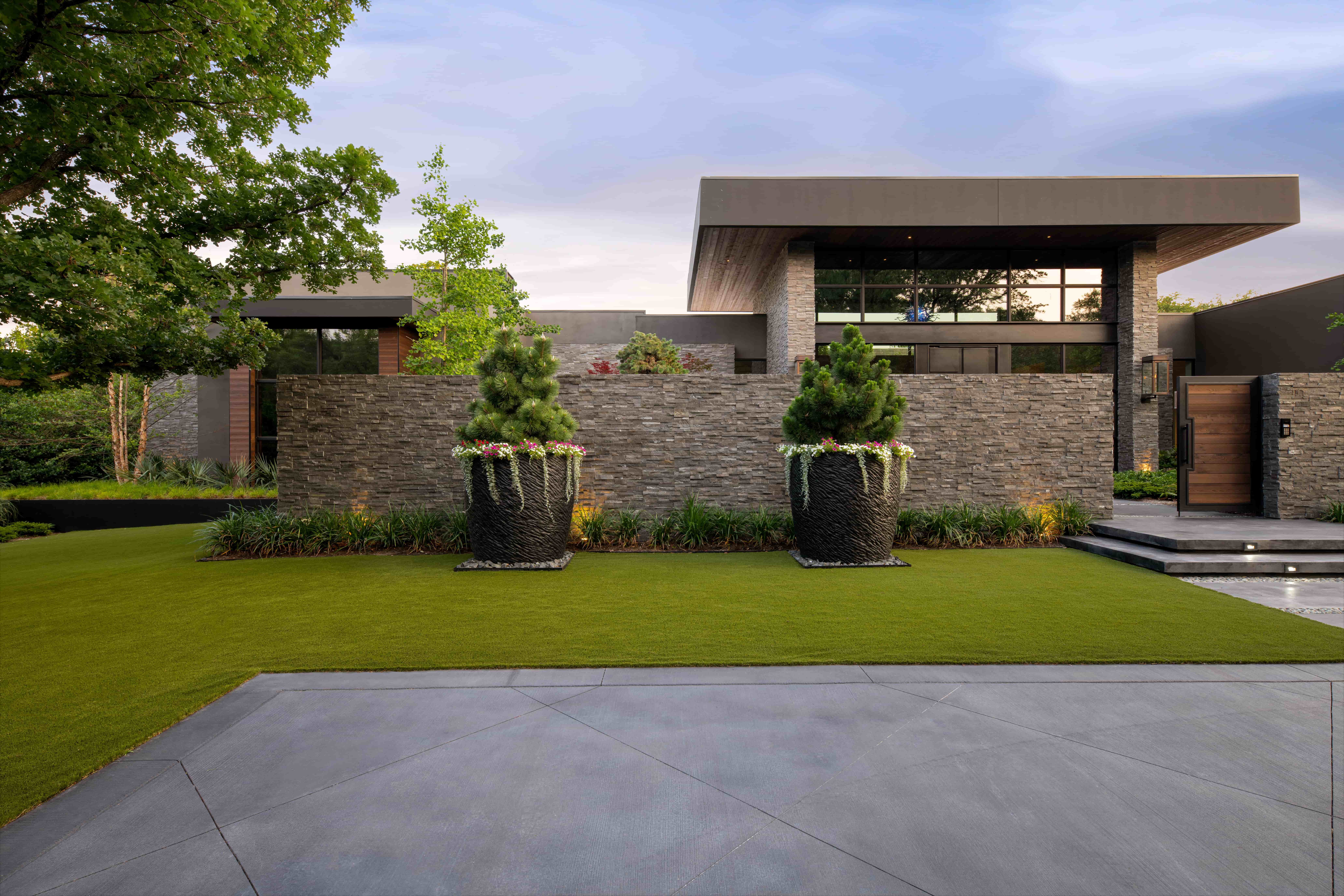
The front of the house sets the first impression of the property. The way the landscape is organized from the street to the front door — motor court, lead walk, entry sequence, planting, lighting — defines how every subsequent experience of the home is read. And yet on most properties, front-of-house design is where the investment stops. The backyard receives the pool, the hardscape, and the planting program. The front receives whatever the builder installed at close. A front house landscape plan is the document that resolves that gap — a coordinated drawing set that treats the front of the property with the same intentionality as the back.
At Blount Designs we work with homeowners across Highland Park, Preston Hollow, University Park, Frisco, and Fort Worth whose front yards do not match the architecture of the home. The renovation is done. The interior is refined. The landscape at the front is still running on a twenty-year-old builder plan. This guide walks through what a front house landscape plan actually includes, how we scope it, and what separates a considered front-of-house design from one that reads as an afterthought.
Schedule a design consultation to scope a front house landscape plan for your property.
What Is a Front House Landscape Plan?
A front house landscape plan is a scaled, coordinated drawing set covering every element in front of the residence — from the property line and street edge through to the entry threshold. It is not a planting list. It is a complete design for the approach: how the motor court is organized, how the driveway meets the street, where the lead walk breaks off, how the entry is framed, how planting defines the envelope, and how lighting resolves the sequence after dark. The best front-of-house plans read as one move — a deliberate progression from street to door rather than a collection of disconnected elements.
Front-of-house plans typically include the same document components used in any full landscape plan: base file drawn from survey, hardscape plan, planting plan, grading and drainage detail, lighting layout, and material schedule. They are usually narrower in program than a back-of-house plan but significantly more consequential for curb appeal and the property's exterior identity. Our full land design engagement covers both halves of a property in coordination; a front-only plan focuses that same design rigor on the approach.
What Does a Front Yard Landscape Plan Actually Include?
A complete front yard landscape plan is built in overlays, each resolving a different element of the approach. The hardscape layer — driveway, motor court, lead walk, steps, landings, entry paving — defines the permanent built envelope and sets the material palette for the front of the property. On a considered plan, hardscape is not a single surface. It is a sequence: drive approach, motor court paving, transition paving, lead walk, landing, entry threshold. Material and pattern change deliberately between zones so the sequence reads as a progression rather than a slab.
The planting layer defines the soft frame of the approach. Layered planting — a mass at the foundation, a mid-height layer, and specimen or accent trees at strategic sightline positions — shapes how the house is revealed from the street. Specimen trees in particular carry significant weight in a front-of-house plan: a mature live oak, a specimen Japanese maple, or a paired magnolia can be the single element that resolves an entire facade. Planting is specified by species, mature size, and placement, with call-outs for seasonal color and foliage rhythm.
The grading and drainage overlay resolves how water moves across the front of the lot — critical on sloped lots, shared driveways, and any property where the motor court transitions to the street. Done poorly, grading shows up as pooling at the entry threshold or an eroded edge along the drive. Done well, it disappears entirely. The lighting overlay specifies fixture placement, circuits, and photometric intent — uplighting on specimen trees, path lighting along the lead walk, entry wash at the threshold, and ambient fill that reads the approach after dusk without over-saturating the property. Our hardscape design documentation and lighting layout are produced as part of the same coordinated plan so the built sequence is consistent at every layer.
How Do You Design a Front Yard That Reflects the Home?
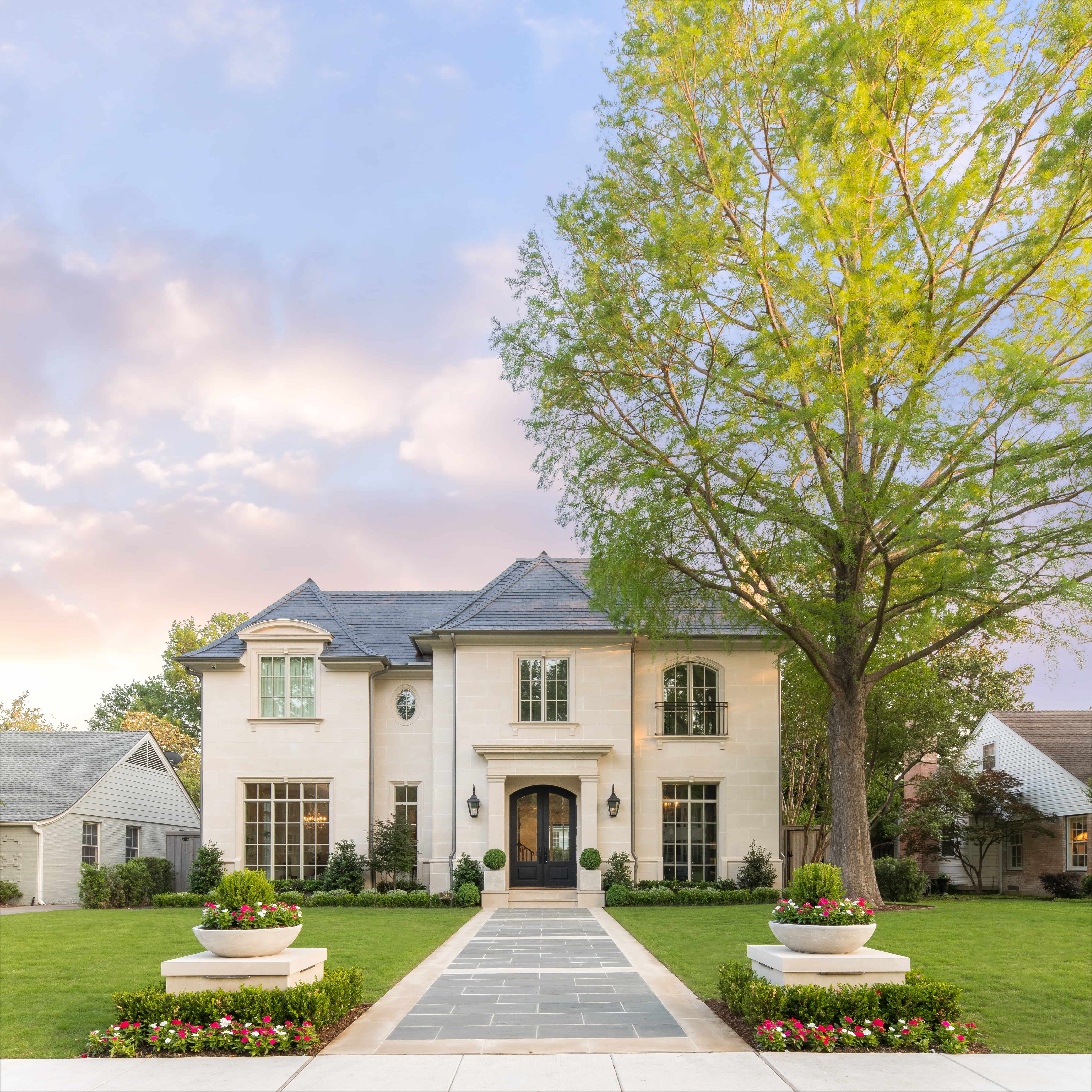
The front of the property has to read as a direct extension of the architecture. A Georgian home is not well-served by a contemporary geometric motor court. A modern glass-fronted residence is not well-served by a formal boxwood-lined lead walk. The architectural language of the home dictates the geometry, material palette, and formality of the approach — and the front yard plan's job is to translate that language into the exterior environment without breaking the read.
The three variables that do most of the work are proportion, material, and sightline. Proportion is about scale — motor court width, lead walk depth, and planting mass all have to sit correctly relative to the facade. A lead walk that is too narrow makes a grand entry feel pinched; a motor court that is too wide makes a modest facade feel hollow. Material is the conversation between the hardscape palette and the home's exterior — stone selection, paving pattern, edging, and coping are specified to echo the home's primary finishes. Sightline is the discipline of what is visible from each point in the approach — the view from the street, from the motor court, from the landing, and from the front door itself. A considered plan controls every one of these views.
Our Modern Entrance project in Dallas is a useful reference for how this plays out. The engagement resolved the full approach — motor court, lead walk, entry paving, planting, and lighting — on a property where the previous front-of-house design fought the home's architectural direction. The finished property reads as one move from the street through to the threshold, which is the outcome every front house landscape plan should produce.
What Front-of-House Elements Drive Curb Appeal in DFW?
North Texas has its own design language for front-of-house work. The climate, soil, and mature canopy in established neighborhoods shape what reads well and what reads awkward. On estate properties in Highland Park, Preston Hollow, and University Park, the existing tree canopy is the most consequential single variable in the front-of-house plan. Every material, planting, and lighting decision has to respect the mature oaks, pecans, and magnolias that define the street character. That is the opposite of the approach that works in new construction corridors in Frisco and Aledo, where the lot is open and the plan has to establish the canopy that doesn't exist yet.
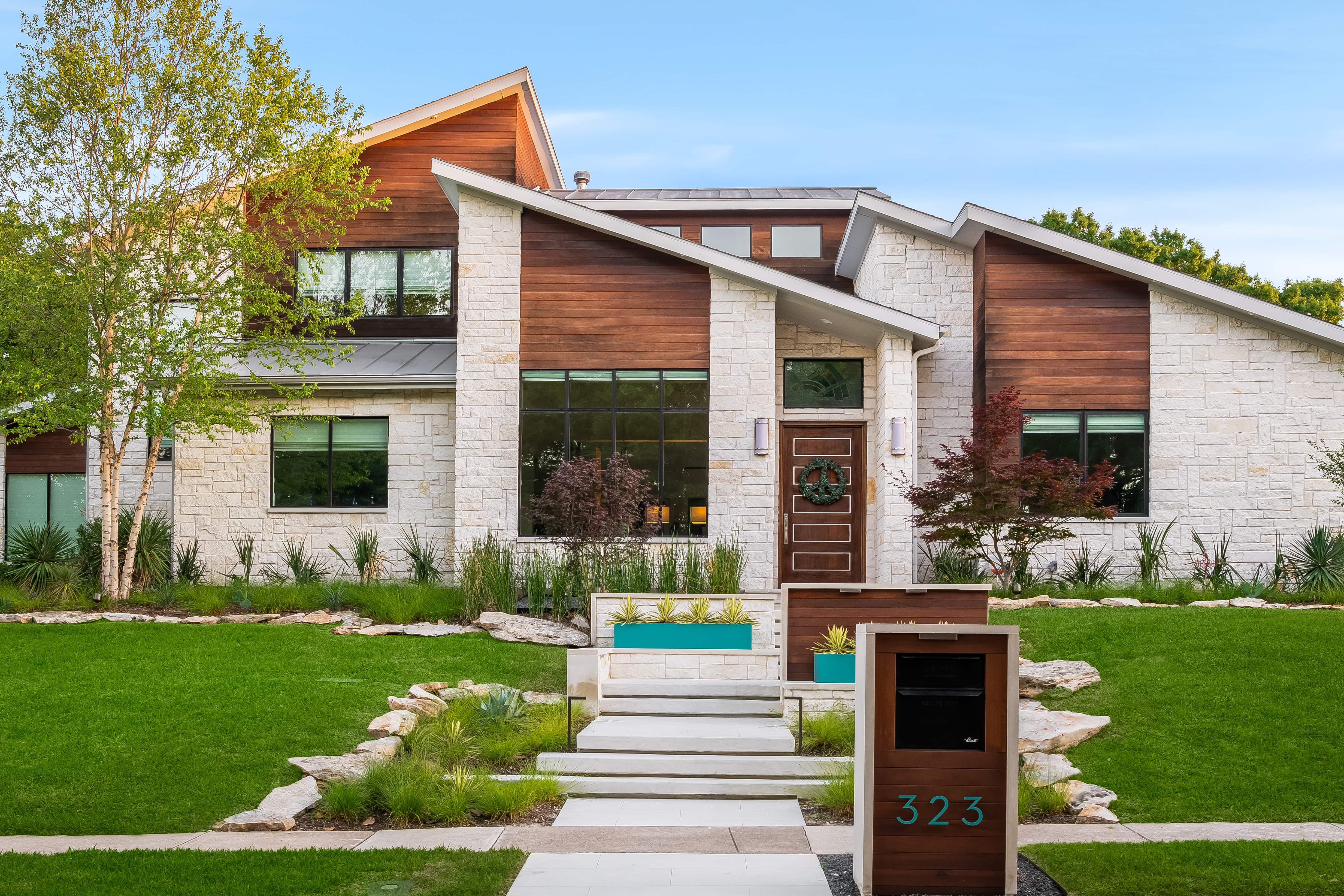
Four elements carry disproportionate weight in DFW front-of-house work. The motor court — its geometry, material, and proportion — is the first read of the property and sets the formality of everything that follows. The lead walk and front landing are the only place a visitor actually pauses, and their material and scale do more for the approach than any other single element. Planting structure — specifically the foundation layer, mid-height layer, and specimen trees — determines whether the architecture is framed or competed with. And lighting, under-invested in on most properties, is the single most effective upgrade to a front-of-house plan that already works in daylight.
How those elements resolve varies by neighborhood. On a Highland Park property, the plan has to work within tight lot constraints and a protective tree preservation ordinance — see our Highland Park landscape design work for how that constraint shapes the approach. On a Preston Hollow estate, the program expands — motor court, lead walk, entry sequence, and planting layer all have more room, and the plan has to hold together at scale, as shown on our Preston Hollow landscape design engagements.
What Are the Common Mistakes in Front-of-House Landscape Design?
The pattern is consistent across under-designed front yards. Proportion is wrong — the lead walk is too narrow for the entry, or the motor court is oversized relative to the facade. Material selection fights the home — a contemporary paver under a traditional facade, or a formal stone under a modern home. Planting is treated as an afterthought, foundation-level only, with no specimen trees and no sightline discipline. Lighting is under-specified, which becomes obvious at dusk when the entire investment goes dark. Grading is glossed over, which shows up as pooling at the threshold or a failed edge along the drive within two seasons.
The less visible but more consequential mistake is treating the front yard as decorative rather than architectural. The front of the property is part of the home's architectural composition — not landscaping in the conventional sense, but an extension of the building's exterior envelope. A plan that approaches it that way produces a different outcome than one that approaches it as plant material around a driveway. Our landscape and garden work starts from that premise on every front-of-house engagement — the plan reads as architecture first.
For proof of scale, look at our Refined Highland Park Retreat — an engagement where the front of the property was resolved in direct coordination with the renovated home — and our Preston Hollow Estate project, where the front-of-house program ran from motor court through planting and lighting as one coordinated plan.
Frequently Asked Questions About Front House Landscape Plans
How much does a front house landscape plan cost?
Fees are project-specific and scoped at the first consultation. Several variables drive the engagement: lot size, scope of hardscape, grading and drainage complexity, whether a new motor court or driveway is part of the work, the planting program, lighting, and the deliverable level required — concept, schematic, or full construction documents. A focused planting-and-lighting refresh is a different engagement than a full motor court, lead walk, and entry sequence rebuild. We scope the project honestly at the first meeting and structure the engagement to match.
Can I do a front yard plan without touching the backyard?
Yes. Many of our engagements are front-only, particularly for clients who have recently finished a backyard renovation and want the front of the property brought up to the same level. A front-only plan follows the same document structure as a full property plan — hardscape, planting, grading, lighting, material schedule — but the scope is limited to the approach. On properties where back and front work happens together, the plans are produced in coordination so the material palette and design language are consistent across the property.
What is the difference between a landscape plan and a curb appeal refresh?
A curb appeal refresh is a cosmetic update — planting swap, mulch refresh, maybe a new mailbox surround or updated lighting. A front house landscape plan is a scaled design document that resolves the entire approach: hardscape, planting, grading, lighting, and material palette. The refresh can be executed in a day by a maintenance crew. The landscape plan is a design engagement that produces buildable drawings and coordinates multiple trades. Most of our clients start the second conversation after a refresh failed to produce the outcome they were looking for.
How long does a front yard landscape design take from plan to install?
Timing depends on scope. A focused plan — planting refresh, lighting, updated lead walk materials — can move through design in weeks and construction in a similar window. A full front-of-house rebuild with a new motor court, driveway regrade, lead walk, entry paving, planting, and lighting is a longer arc, especially when HOA review or tree preservation coordination is part of the path. At the first consultation we map the deliverables to a realistic schedule so the project timeline is clear before design begins.
If you are planning a front-of-house landscape rebuild or a full property reset in Dallas, Highland Park, Preston Hollow, Frisco, or the surrounding DFW estates, request a design consultation. Our project portfolio shows front-of-house plans translated into built work across the neighborhoods we design for across North Texas.
Related


